

Sightseeing in Ankara, Turkey – in 1 day
The last time I tried to visit Turkey (properly called Türkiye) was back in the 1980s, and my attempt failed. I’ll tell that story at the end of this article.
I will tell you, though, that I finally managed to get there when I flew to Ankara to lead a workshop decades later. I tacked on one extra day to look around a bit, as I often did when I traveled for work.
Disclosure: This article contains affiliate links. Making a purchase through an affiliate link will mean a small commission for this website. This will not affect your price. Privacy policy.
[Last updated June 27, 2026]
Without further ado, here are my suggestions for what to do in Ankara, Turkey, in one day:
Things to do in Ankara, Turkey
Ankara isn’t a tourist destination; it’s a seat of government. It’s also a very big city covering a large area. Nevertheless, there were plenty of things to see in Ankara to suit my interests. Here’s what I did, in the order I followed:
1. Roman Baths
I started my sightseeing day at Ankara’s Roman baths. Ankara was an important crossroad between East and West in the Roman period, and the Romans did a lot of building in the 3rd century CE, though little of it remains. The baths, not far from the oldest part of the city, were among the largest in the Roman Empire.
On entering and paying a small admission fee, I first climbed a few stairs to a large flat field. Bits of Roman art and architecture line the paths around and across the field. It reminded me of places like Greece and Israel, where bits of antiquity are so common that they end up just lying around. Often, they are pieces that would take pride of place in a US museum.
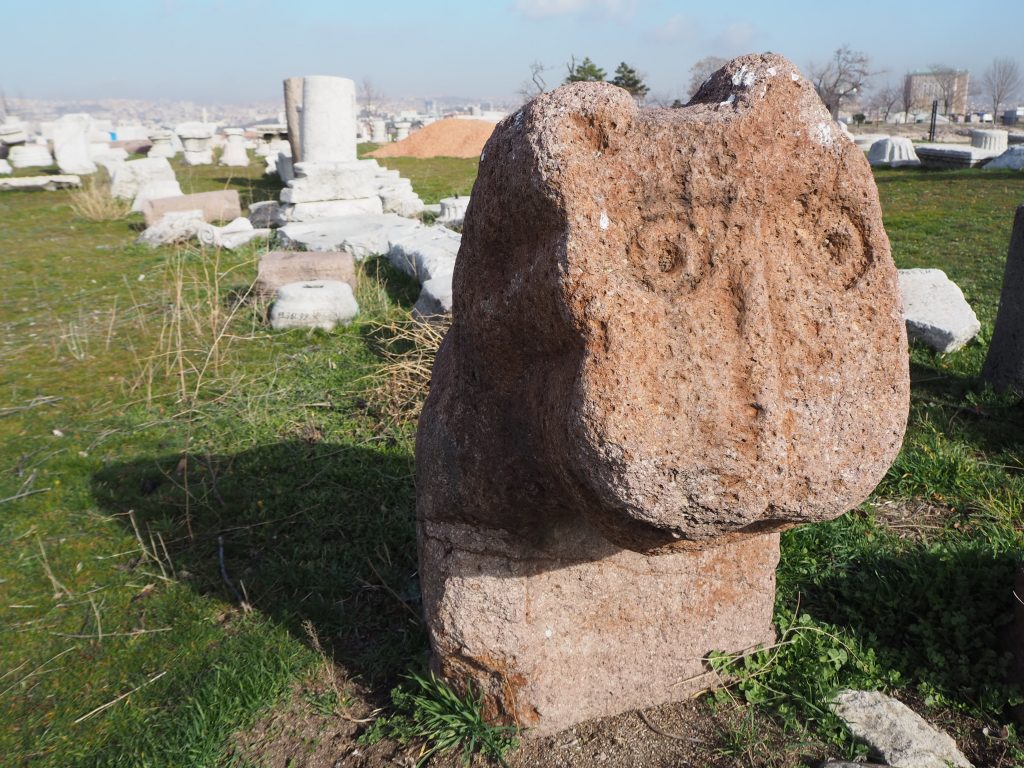
Broken columns with ornate Corinthian ornamentation, gravestones carved with human images or epitaphs, and random architectural elements dot the field. Crossing the field took me to the baths themselves, surrounded by a wall with a walkway on top, allowing visitors to view the baths from slightly above.
Moving around the ruins – but not entering them – you can see the remains of the typical features of Roman baths: a hot bath (caldarium), warm bath (tepidarium) and cold bath (frigidarium), as well as a dressing room and a pool. Small, neat piles of bricks remain: they would have held up a floor, and hot air would have circulated around them, heated elsewhere by an oven.
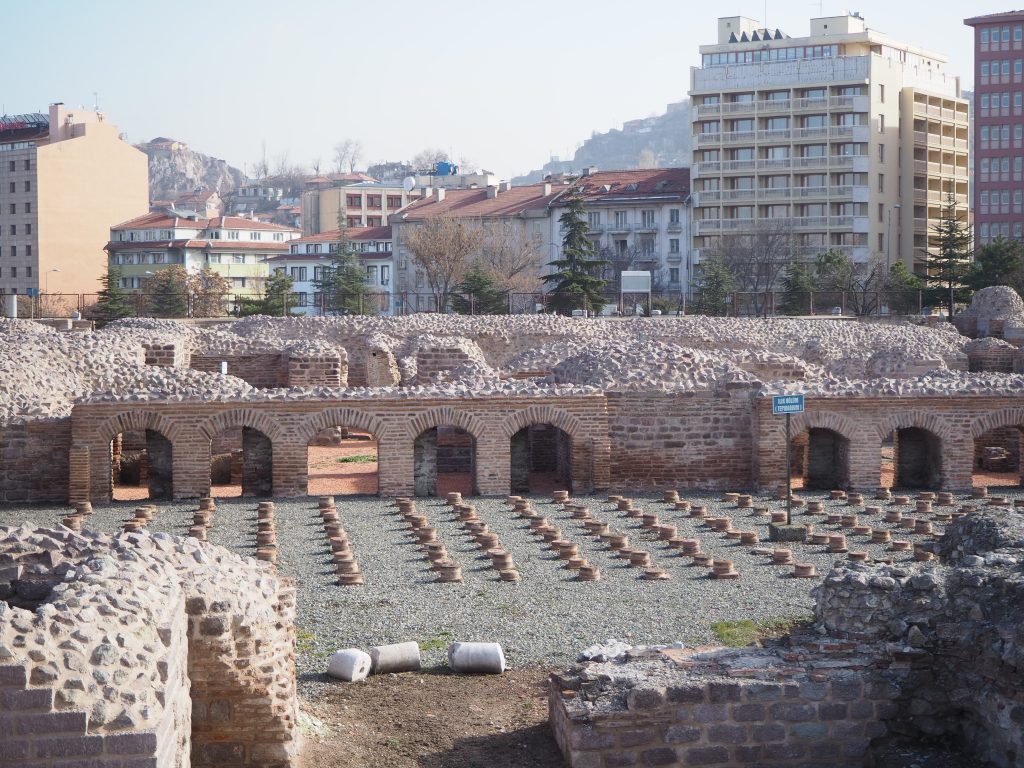
The Roman baths are interesting in that they give an impression of how old Ankara is. Excavations done in the 1930s, when the Turks developed Ankara to be their capital city, didn’t only find Roman ruins. The Romans built on older civilizations, including the Phrygians, dating to a thousand or more years earlier.
Roman Baths: Ankara Altındağ Anafartalar Mahallesi. Open daily 8:30-18:45. Admission fee: €3. Website.
2. Hacı Bayram mosque
3. The Temple of Augustus and Rome
I list these two together because they appear to be literally attached to each other. Again this reminded me of Israel – Jerusalem in particular – where structures and beliefs have both literally and figuratively intertwined.
If you are a strong walker, it is probably not a problem to walk from the Roman baths to the mosque and temple. I didn’t, because a massive construction project cut off the most direct route. Instead I took a taxi, which only took about three minutes and was very cheap – after some argument about the price – to reach a pedestrian street about a block or so from the mosque.
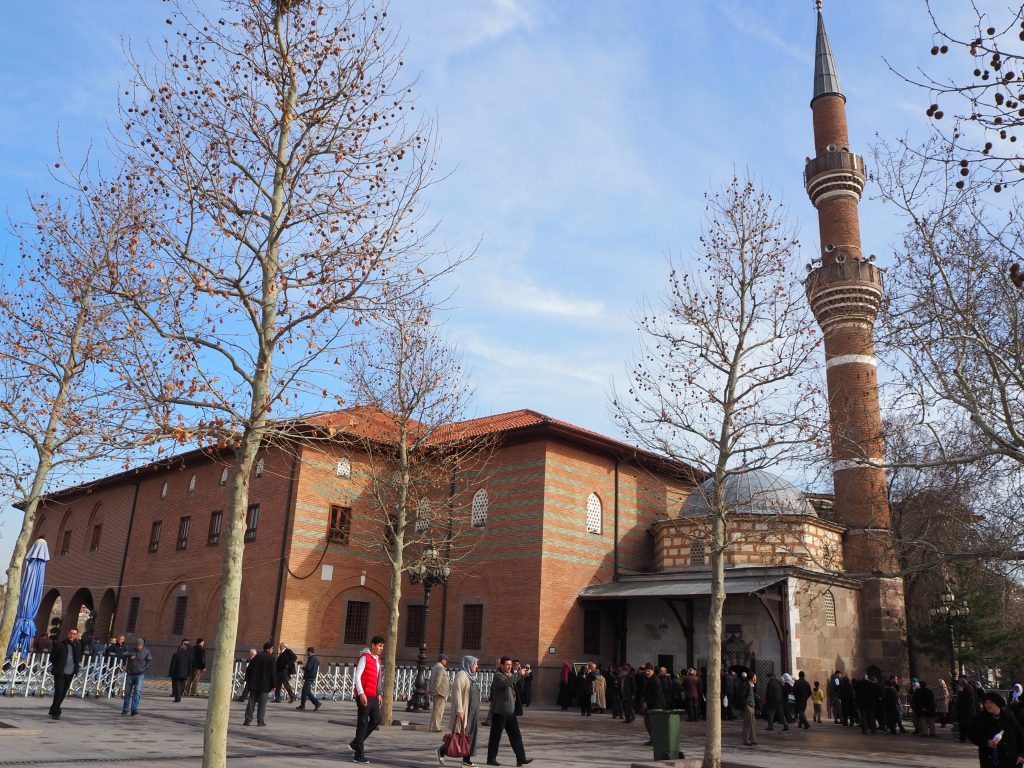
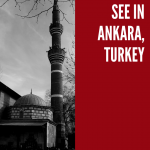
Hacı Bayram mosque dates to the 15th century. In Ulus, the oldest part of the city, it has a wide plaza on one side and fountains on another. When I visited on a Friday morning, many people – locals, not tourists – were enjoying the weak February sun on the plaza. The fountains weren’t working, and men were rolling out mats on the plaza, presumably readying the space for overflow from the mosque.
The entrances to the plaza were blocked off and guards checked everyone by patting them down or scanning them with handheld metal detectors. When I asked a guard – female, and without a headscarf – whether I needed a headscarf, she just shrugged. Seeing that all the women on the plaza had headscarves on, I put mine on too.
Have you booked accommodations yet? Take a look at places to stay in Ankara.
Removing my shoes outside, I entered the small mausoleum part of the mosque, just under the minaret. The tomb of Hacı Bayram-ı Veli, a Sufi spiritual leader, fills most of the tiny room. Men and women prayed either standing or kneeling. The ceiling has some pretty detailing, but I didn’t feel comfortable pulling out my camera and taking pictures in the midst of all of those praying people. I also didn’t feel comfortable trying to enter the main part of the mosque, so I don’t know what the rules are. I suspect male tourists would be allowed in, while women probably could only enter a separate women’s section.
Hacı Bayram mosque: Hacı Bayram Mahallesi, 06030, Sgk-ulus Şubesi, 06030 Altındağ. No published hours, but it should be open all day. No charge, but make sure to ask what is or is not allowed. If you’re female, dress conservatively and wear a headscarf to enter. Remove shoes before entering.
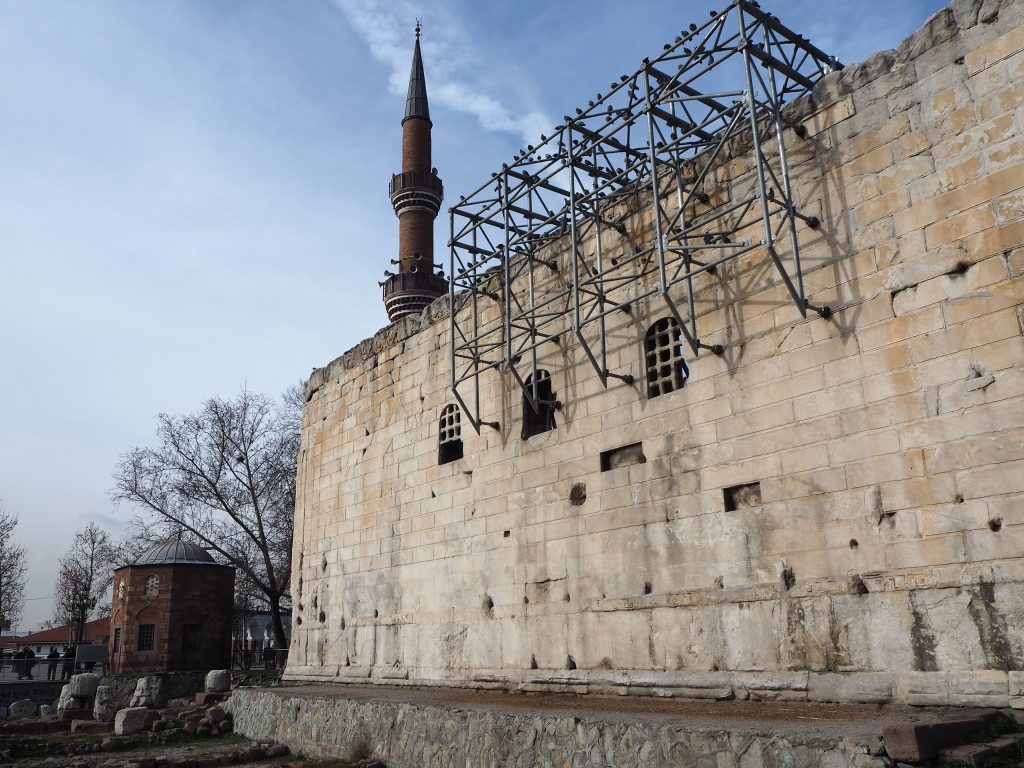
The Temple of Augustus and Rome next door is much older: first built in the 1st century, it was rebuilt in the 2nd century and later turned into a church in the 6th century. Unfortunately, there doesn’t seem to be a way in, so I was only able to see it from the outside. The marble sides, I assume, are Roman, while the alternating rows of black and reddish-brown stone were probably part of the Byzantine remodeling.
The Temple of Augustus and Rome is only visible from the outside. Hacı Bayram Mahallesi, 06030, Sgk-ulus Şubesi, 06030 Altındağ, next to the mosque.
If you’re interested in ancient history, you might also like these articles:
- Knossos and the Minoan Mystery: who were the Minoans and what happened to them?
- Susita National Park in the Golan Heights: A neglected Roman city on a dramatic site in Israel
- Visiting the City of David: Older than the Old City of Jerusalem: David, as in the Biblical David
- The Baalbek Ruins in Lebanon: An extraordinary UNESCO site: amazing Roman ruin.
4. Ankara Castle
I could see Ankara Castle high on a nearby hill from near the mosque, but didn’t fancy walking down into the valley between and then up to the castle, so again I took a taxi. It took about 10 minutes and cost just a few euros.
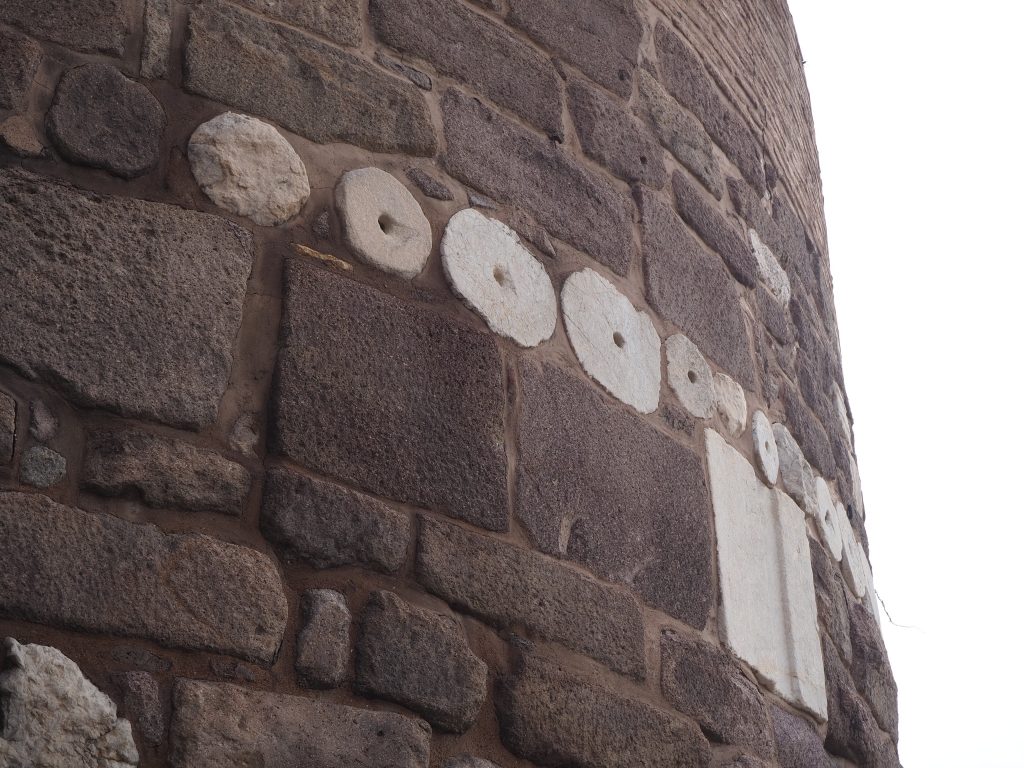
The imposing entrance to Ankara Castle has two squat, rounded towers flanking it. What drew my attention, though, was the blocks making up those towers. Evidently, the builders of the 7th-9th century were thrifty, and not inclined to waste all the perfectly good masonry lying around. The structure, mostly composed of dark stone blocks, is dotted with marble pieces, clearly recycled from the earlier Roman castle that used to top the hill. These builders were probably renovating earlier versions of the castle, though it’s not at all clear how far back the hill was fortified.
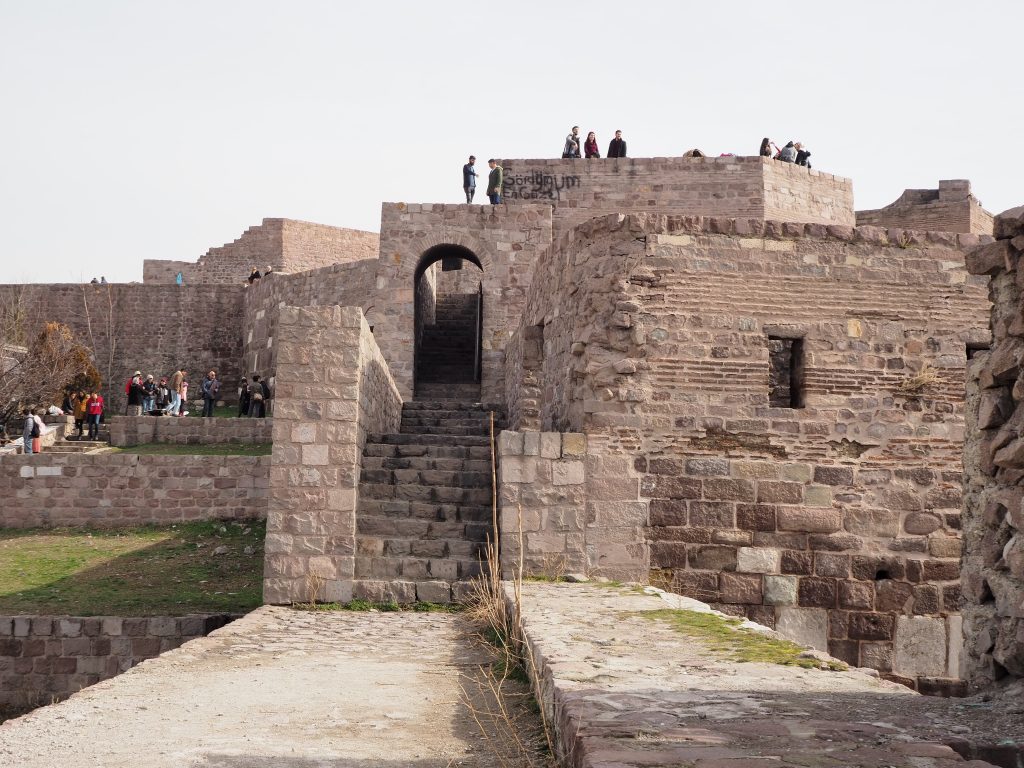
In any case, Ankara Castle isn’t really a castle; it’s a fortified hilltop, and only the walls remain. Through the main gateway you enter an area of narrow pedestrian streets lined with gift shops and restaurants. These are interesting old buildings, many made of wood frames filled with brick and mud, with clay tile roofs. A short walk takes you to the inner walls of the castle on the peak of the hill.
The inner castle walls have not been modified in any way for safety. When I was there, a group of Japanese tourists, and a smattering of locals as well, were climbing and walking the walls like mountain goats, something I didn’t dare to do. The tops of the walls are uneven in places, without guard rails, and I just didn’t feel graceful enough to take the risk.
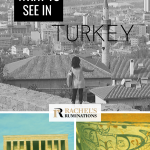
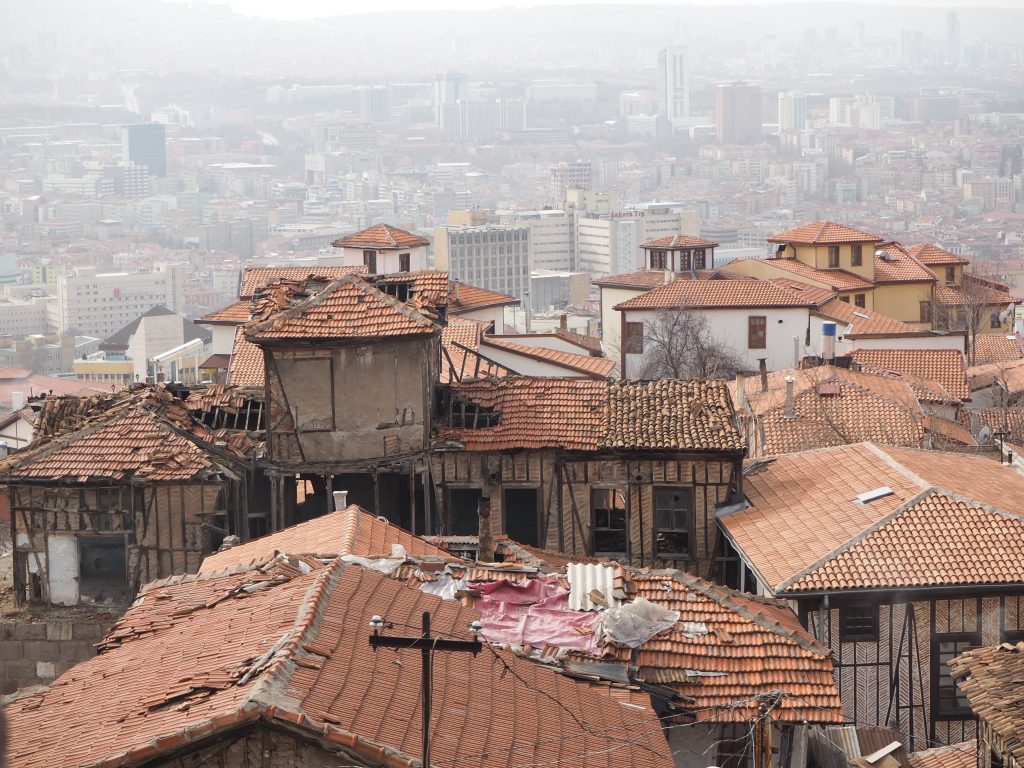
Nevertheless, from the areas where I felt safe, I could see over the roofs of the older houses nearby to the rather hazy skyline of the modern city beyond. It must be stunning at sunset, but I still had other sightseeing in Ankara to do. Here are more pictures from exploring Ankara Castle:
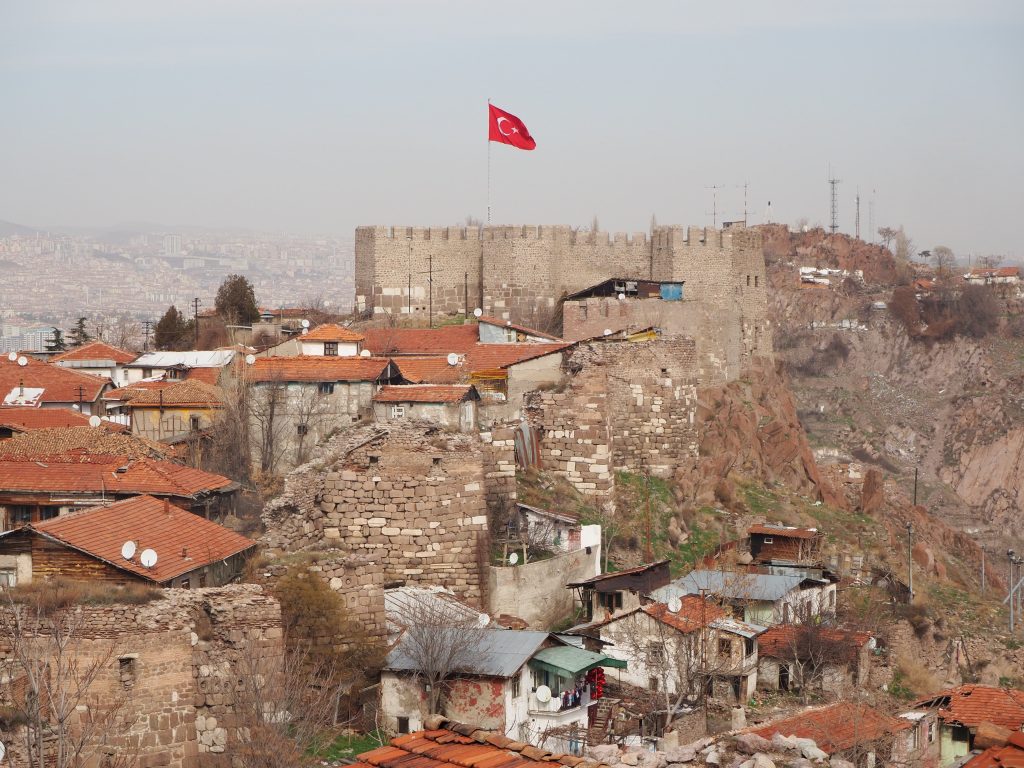
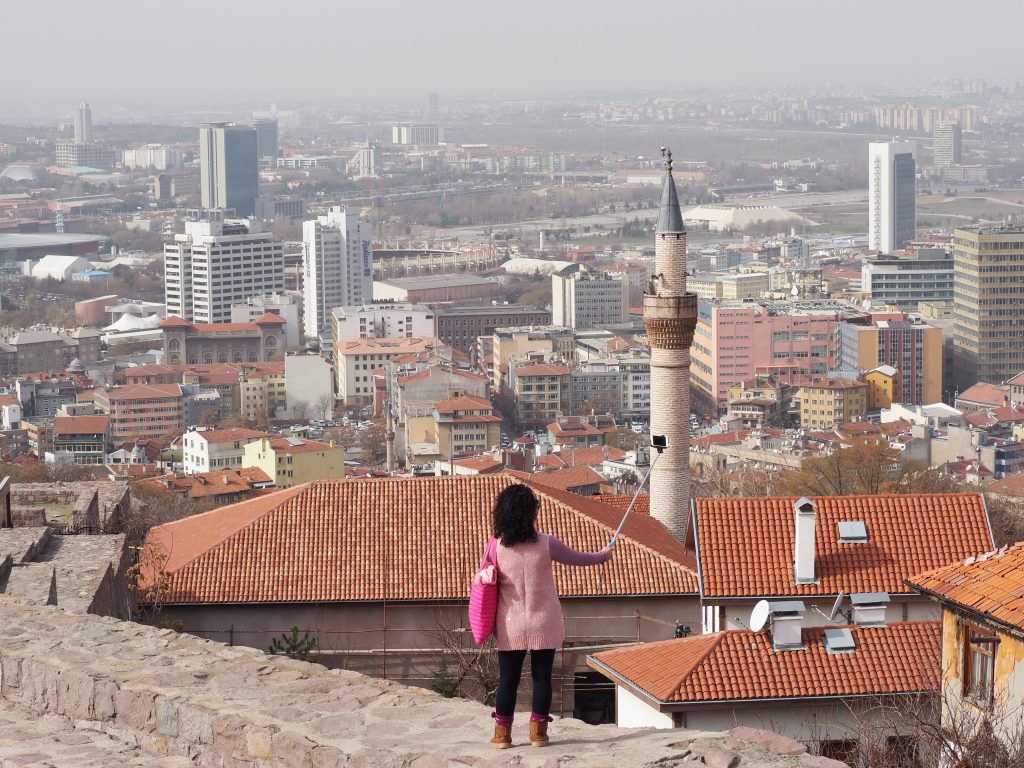
Ankara Castle: Kale Mah., 06240 Altındağ. Open daily 8:00-20:00. No entrance fee.
If you like castles and fortifications, take a look at these: Burghausen Castle, Gripsholm Castle, Himeji Castle, or Belvoir Fortress.
5. The Museum of Anatolian Civilizations
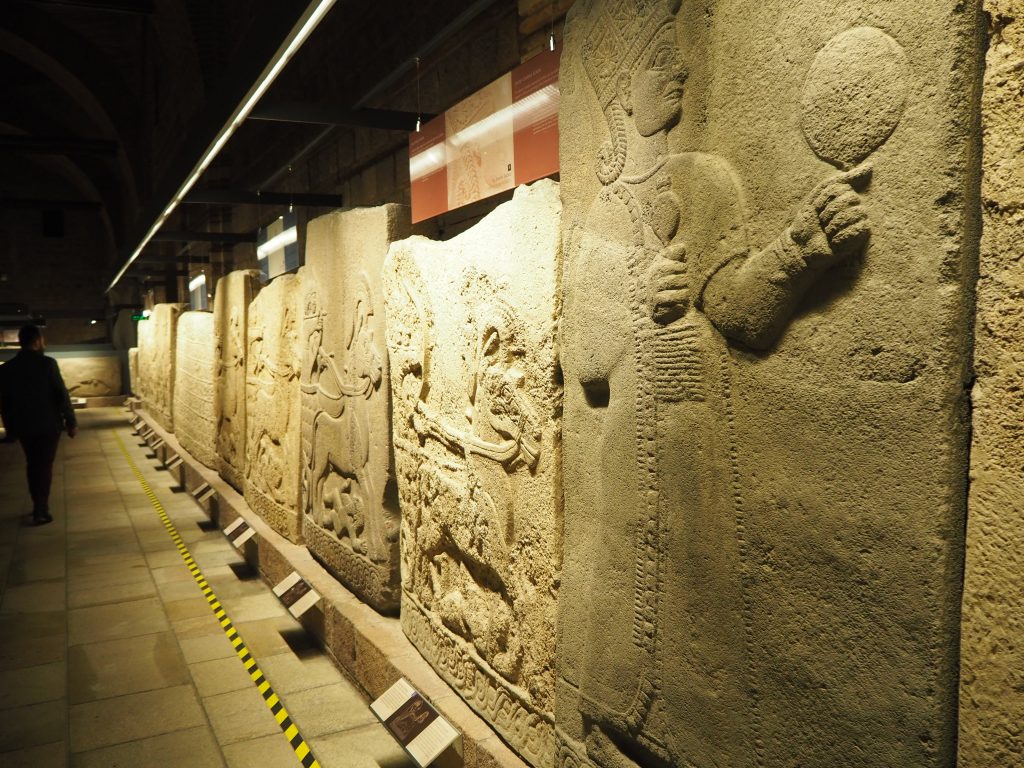
The Museum of Anatolian Civilizations is just a short walk downhill from Ankara Castle. The tree-shaded, elegant, 15th-century building was once a marketplace, and has been very effectively converted into a museum. Bas-relief orthostats, which are large square stones that originally decorated the lower part of walls, line the high, domed, central hall. They date to the early Bronze Age and the Hittite Period, and depict, for example, battles involving the Hittites and the Egyptians, or gods and goddesses.
In the halls arranged in a square around the central hall, artifacts are grouped by period and by location, spanning centuries of history. I skimmed, at this point, by just strolling the halls and letting the more striking pieces draw me in.
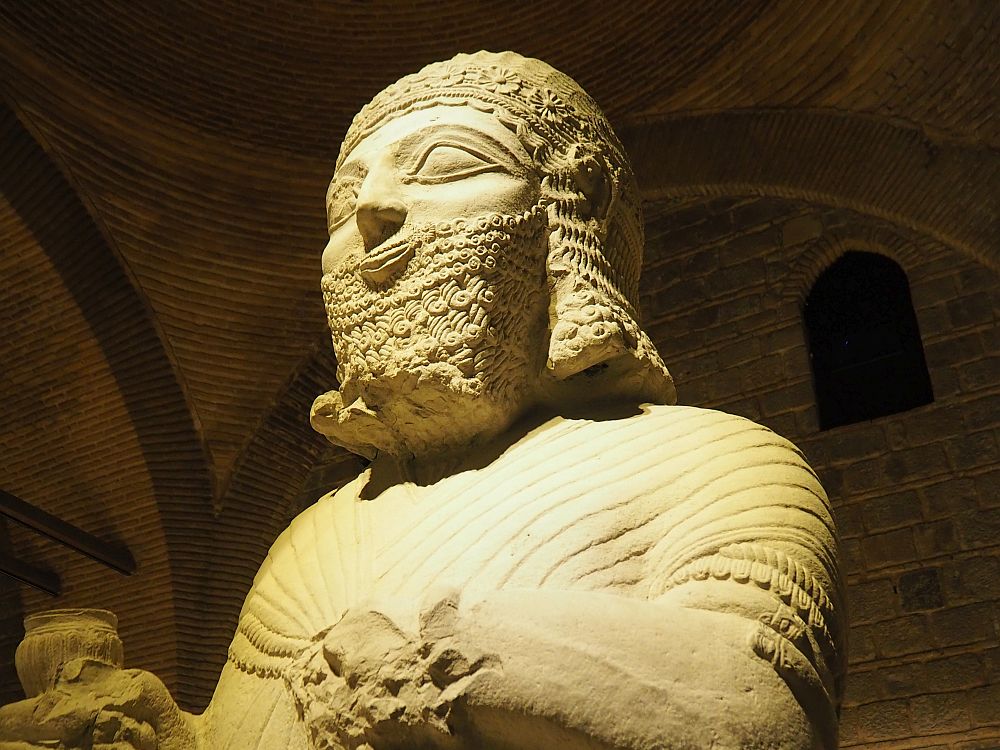
Pottery, metalworking and stone carving are all represented here, in a wide array of styles and periods. Useful items like tools and pottery stand side by side with statues and other ceremonial objects.
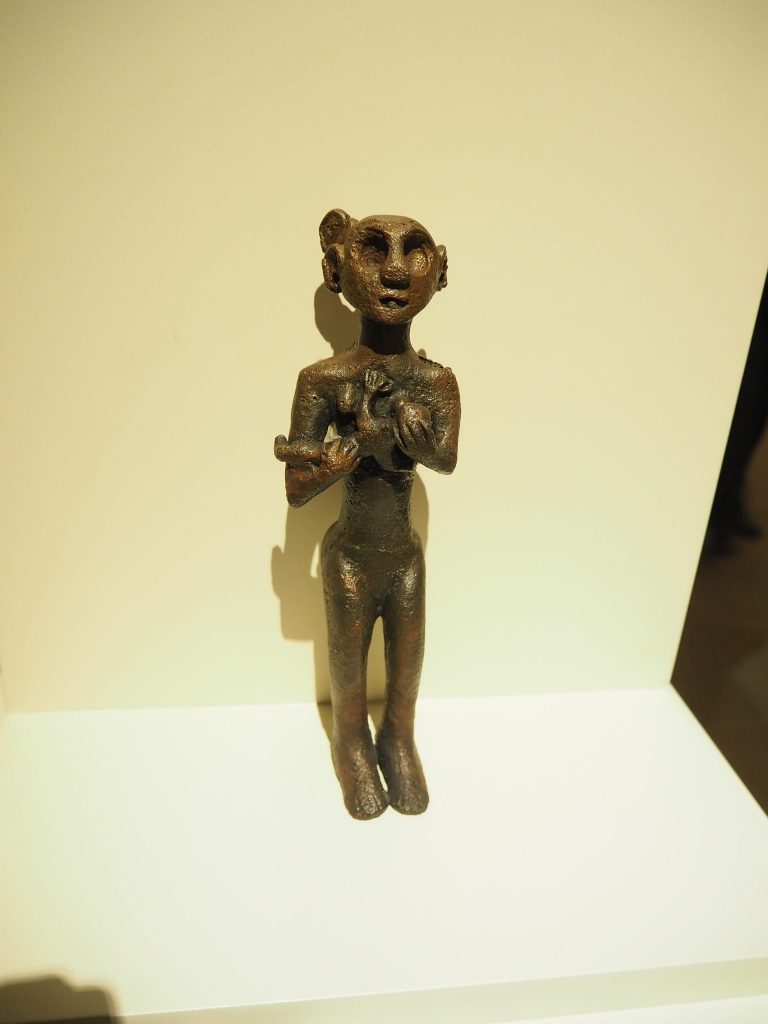
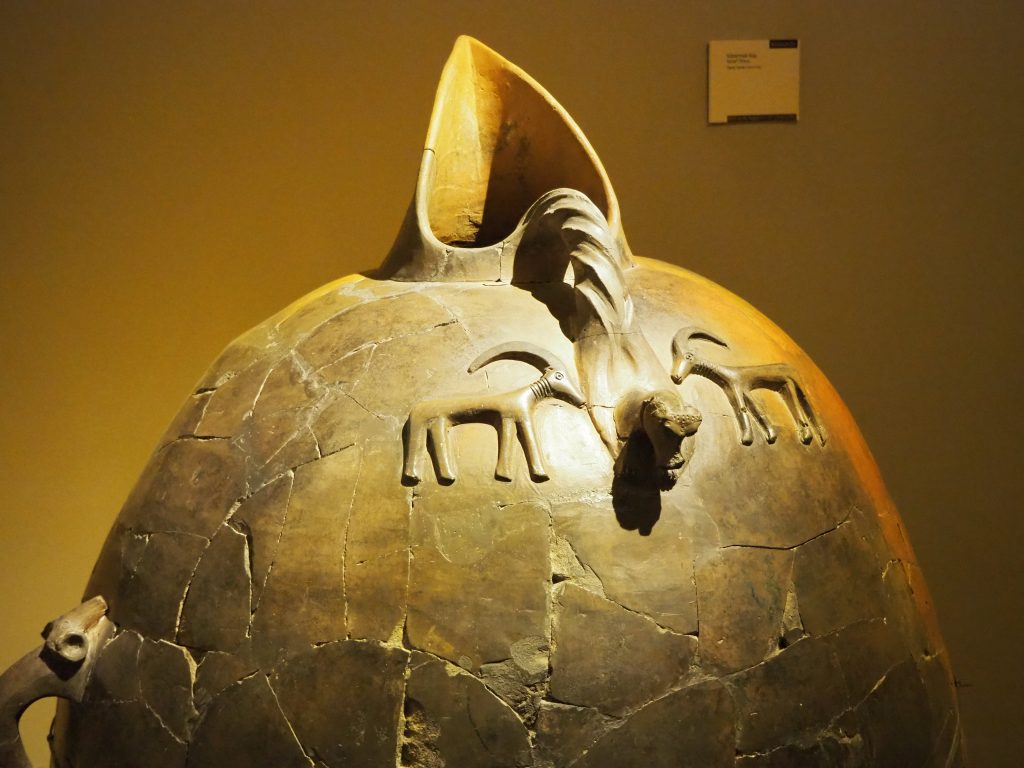
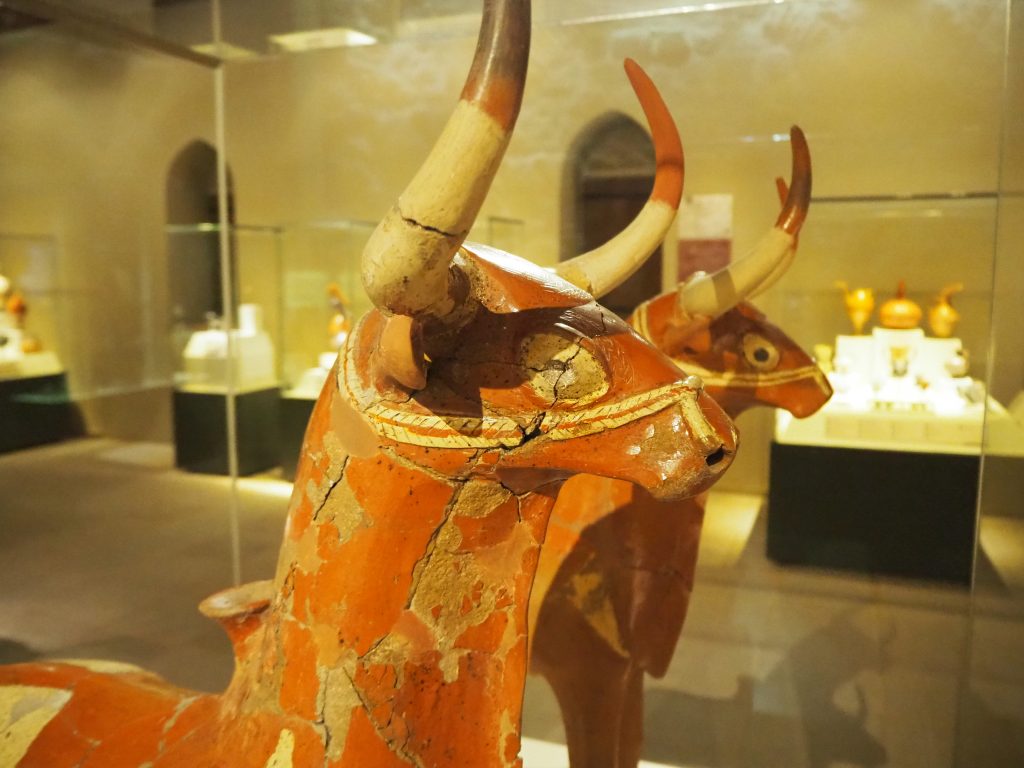
I followed the steps downstairs to view the Greek and Roman section, where, among other things, the better finds from the excavation of the Roman baths are on display, protected from the elements.
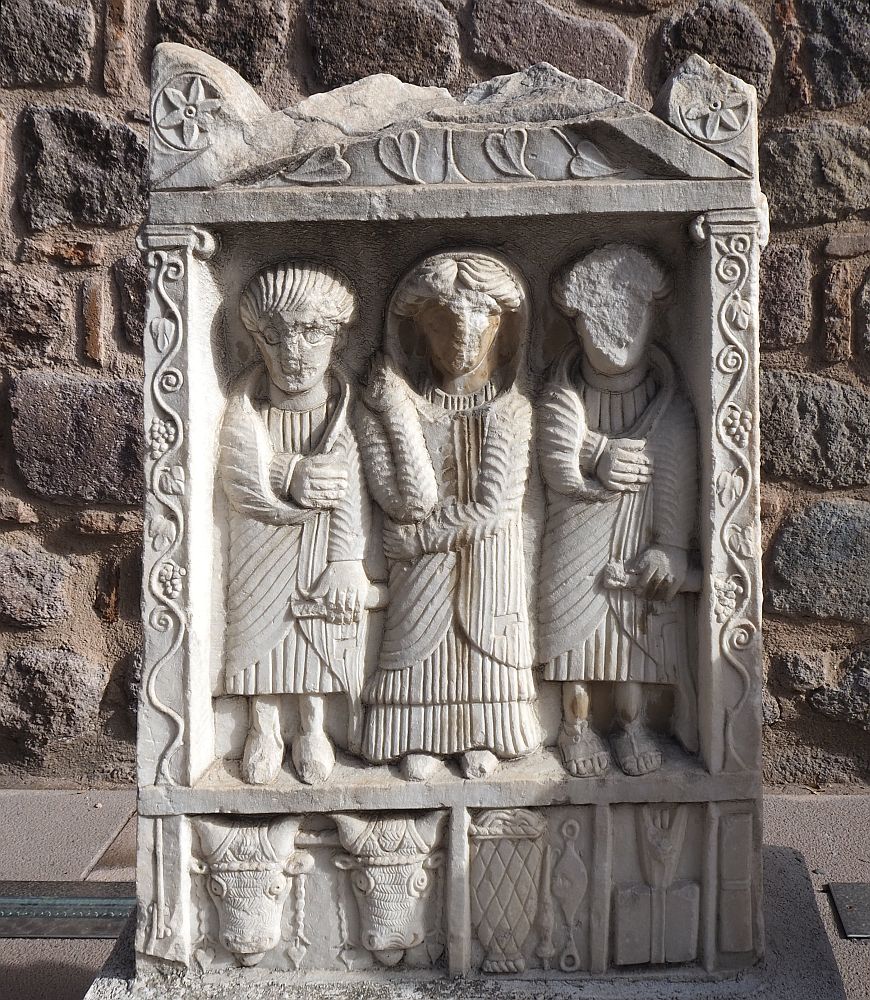
Outside, I strolled the grounds, where carvings of various kinds dot a sort of sculpture garden. On one side of the building is a row of Roman grave markers, beautifully carved.
In the corner stands a cluster of large clay pots: the sort that cannot stand on their own. These are less decorative than many of the items inside, which I assume means they were storage pots.
To do this museum justice would take a couple of hours at least.
The Museum of Anatolian Civilization: Gözcü Sokak No:2 06240 Ulus. Open daily 8:30-18:45. Admission: €12. Website.
6. Aslanhane Mosque
Nearby the Museum of Anatolian Civilization and Ankara Castle, the Aslanhane Mosque is one of the oldest in Turkey, dating to the 13th century. I didn’t go inside, but it was worth stopping to admire the architecture. Like the castle, many of the stones come from earlier structures. The mosque is supported inside by carved wooden pillars.
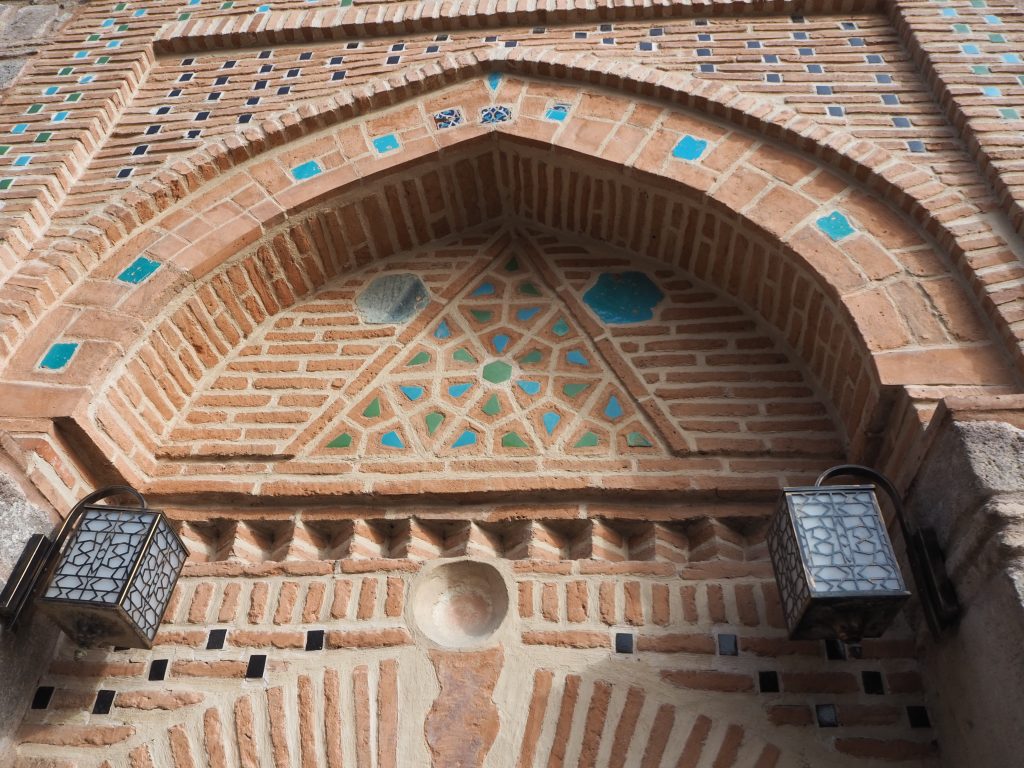
Aslanhane Mosque: Kale Mh., 06240, Kale Sk., 06250 Altındağ. No published hours, but it should be open all day. No charge, but make sure to ask what is or is not allowed. If you’re female, dress conservatively and wear a headscarf. Remove shoes before entering.
7. Anitkabir
Anitkabir is about a 15 minute drive from Ankara Castle, so I took a taxi again. Set in a large, green parkland on a hill, this imposing building is the mausoleum of Turkey’s founding father, Mustafa Kemal Atatürk. He led the Turks in their war of independence and was the Republic’s first president.
Completed in 1953, Anitkabir consists of a broad, flat, rectangular plaza, with the large, square mausoleum at one end and lower porticoes lined with pillars around the sides. Some rooms behind the porticoes contain exhibits about Atatürk.
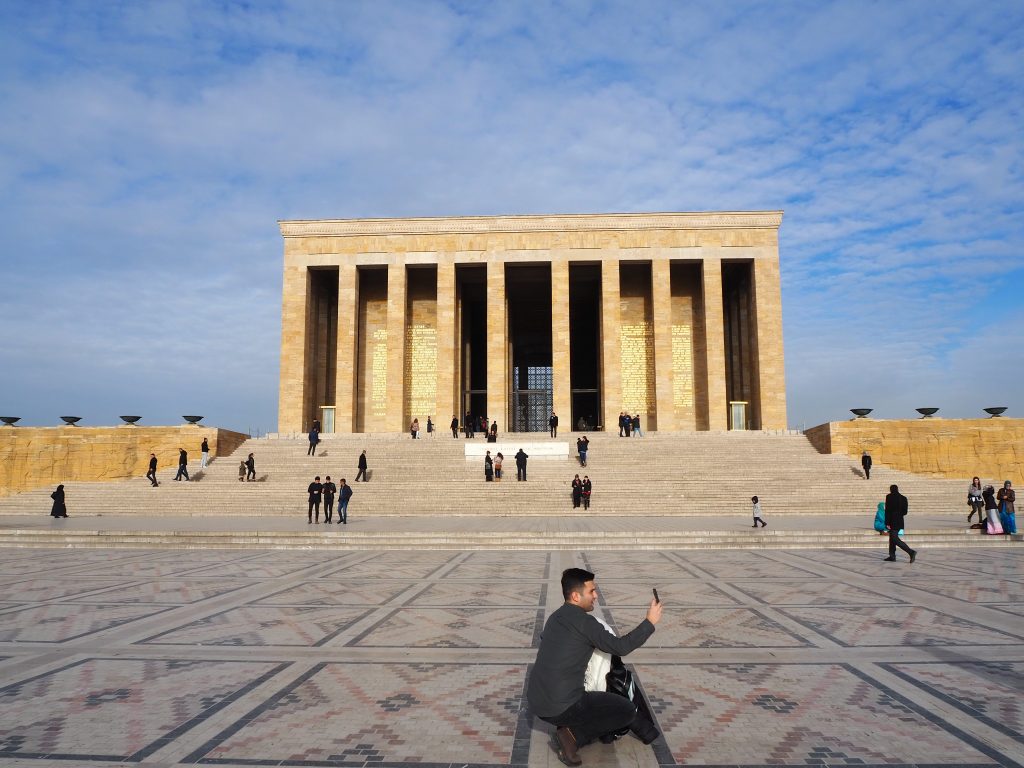
I got there just in time to see the changing of the guard, which involved some very precise goose-stepping troops, followed by a swarm of photo-snapping tourists. Once that ended, I enjoyed wandering the plaza in the evening sunlight and admiring the mausoleum itself.
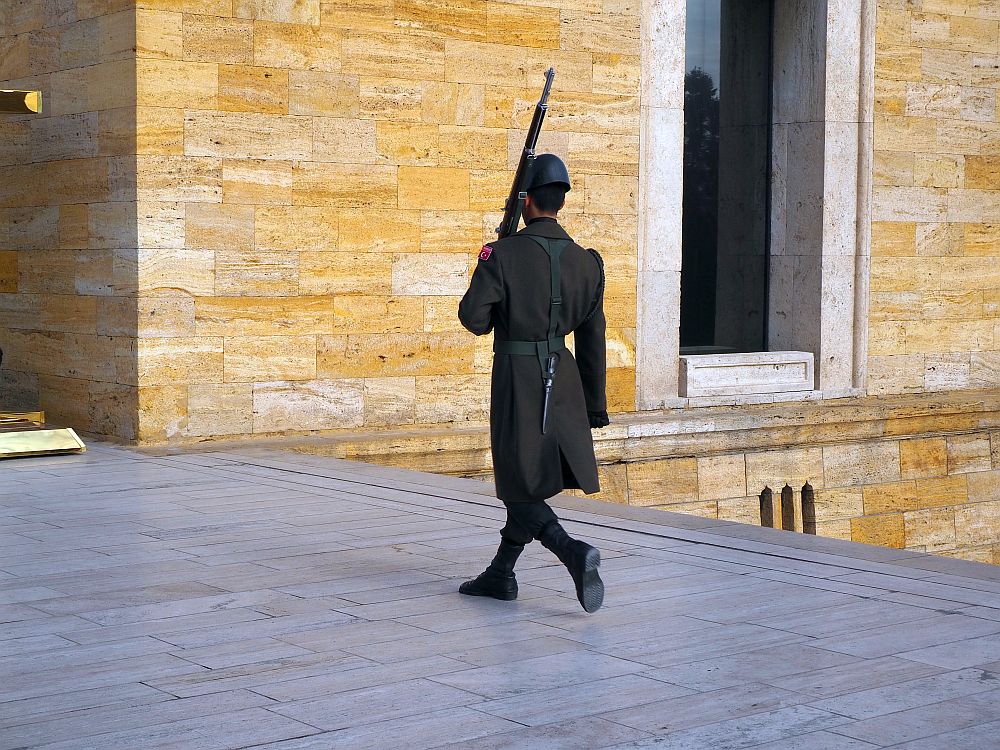
It surprised me that something built in the 1950s – not my favorite architectural period – could be so pleasing to look at. The mausoleum is simple but well-proportioned, and its open design is light and airy, despite its imposing size. Entering the mausoleum, I was again surprised to see that Ataturk’s tomb is quite small, placed at the back of a large, empty, central hallway, and unadorned except for a simple wreath.
Anitkabir: Anıt Caddesi Tandoğan. Open daily: February 1 to mid-May 9:00-16:30, mid-May to end of October 9:00-17:00, and November to end of January 9:00-16:00. Free admission. Website.
Tired, feet hurting from a day of walking, I decided that this would be my last stop of my one day of sightseeing in Ankara. I managed to see the most important sights, so I felt satisfied.
There are more things to do in Ankara, and if I had had more time, I might have visited one or more of the other museums, like the archaeological museum or the industrial museum, and perhaps shopped in a market or in the old part of town.
It might be easier to take a tour: either a group walking tour, which would include some of these sites, or a private one, which would allow you to choose what to see. And you’d get the added benefit of spending time with someone who knows the city. See some of the tours available.
Why I’d never been to Turkey
At last count, I’ve visited 78 countries. Yet, until this trip, I’d never been to Turkey. Why? I blame it on Midnight Express, the 1978 film recounting the story of Billy Hayes, who was arrested for drug smuggling in Turkey and spent a brutal five years in jail before he finally escaped.
And I blame my mother.
It was the fall of 1986 and my friend Stuart and I were traveling around Europe. Our plan was to visit Turkey on our way from Greece to Israel.
My mother, though, had seen Midnight Express and was absolutely convinced that I would end up meeting the same fate as Billy Hayes. In her eyes, I looked like a hippie, and tended to dress like a hippie. I assured her I had no intention of smuggling or taking any drugs, but she rather hysterically insisted that someone could easily plant some on me or my luggage, and I’d end up in jail anyway.
Normally I would have just ignored her fears, gone to Turkey and not told her until afterwards. However, since I had just finished my two-year stint in the Peace Corps and hadn’t been back to the US yet, she still had power of attorney over my bank account. On the phone, sounding on the verge of tears, she threatened, “If you go to Turkey I’ll cut off your money.”
Amazed that my normally not-so-dictatorial mother would make a threat like that, I gave in. Stuart and I went directly from Greece to Israel, with a short stop in Cyprus.
Without getting into a whole debate on the merits of Midnight Express, which portrayed Turkey in a violent and apparently unfair way, I’ll just say that filmmakers should be aware of the effects they have on audiences; to most viewers “based on a true story” means “true story.”
Anyway, I’ve always meant to get there – everyone who’s been to Istanbul, in particular, says it’s wonderful – but never got around to it. I still haven’t been to Istanbul, but I will. My mother might be turning in her grave, but at least I don’t look anything like a hippie anymore. I think I can risk it, don’t you?
Please share this post in whatever way gets your social media juices flowing. And leave a comment below, if you have anything to add! Thank you!
My travel recommendations
Planning travel
- Skyscanner is where I always start my flight searches.
- Booking.com is the company I use most for finding accommodations. If you prefer, Expedia offers more or less the same.
- Discover Cars offers an easy way to compare prices from all of the major car-rental companies in one place.
- Use Viator or GetYourGuide to find walking tours, day tours, airport pickups, city cards, tickets and whatever else you need at your destination.
- GetTransfer is the place to book your airport-to-hotel transfers (and vice-versa). It’s so reassuring to have this all set up and paid for ahead of time, rather than having to make decisions after a long, tiring flight!
- Buy a GoCity Pass when you’re planning to do a lot of sightseeing on a city trip. It can save you a lot on admissions to museums and other attractions in big cities like New York and Amsterdam.
- Ferryhopper is a convenient way to book ferries ahead of time. They cover ferry bookings in 33 different countries at last count.
- I’ve become an affiliate for VisitorsCoverage travel insurance, mostly because you should ALWAYS have travel insurance when you travel! You may be young and healthy and never get sick, but the fact is, sh*t happens, and it’s worse if you don’t have insurance!
Other travel-related items
- Get an e-sim! It’s really awkward to have to rely on WIFI when you travel overseas. An e-sim is a great alternative to paying high roaming fees for your home provider. Both GigSky and Holafly have worked well for me, so it’s worth comparing them. Holafly offers unlimited data, but if you won’t use that much, GigSky might be more cost-effective. For both companies, I’ve sometimes needed help from their customer service to get the e-sim working, but both companies have great customer service, so it wasn’t a big deal. Download either of their apps and activate it when you need it.
- Another option is a portable wifi modem by WifiCandy. It supports up to 8 devices and you just carry it along in your pocket or bag! If you’re traveling with a family or group, it might end up cheaper to use than an e-sim. Use the code RACHELSRUMINATIONS for a 10% discount.
- I’m a fan of SCOTTeVEST’s jackets and vests because when I wear one, I don’t have to carry a handbag. I feel like all my stuff is safer when I travel because it’s in inside pockets close to my body.

Rachel Heller is a writer living in Groningen, the Netherlands. She is the owner and primary author of this website, Rachel’s Ruminations, a travel blog focused on independent travel with an emphasis on cultural and historical sites/sights. Read more here about her and about this website. All photos in her articles are her own, unless otherwise specified. Rachel also owns and operates a website about World Heritage travel.
I was fortunate enough to go to Istanbul for a conference when I was still working. The Sofia, the Blue Mosque, and the Grand Bazaar are must-sees in one’s lifetime. And our hotel was a former castle! But I am surprised Ankara also has a lot to offer! But I also want to go back for Capadocia!
This was my first glimpse of Turkey, but Istanbul is high on my bucket list!
We’ve been to Istanbul, although not for long enough, and saw Gallipoli and Cappadocia, but never got to Ankara. Which is odd since a capital is bound to have some attractions. I really want to see that museum of Anatolian civilizations. And the Roman baths. I’m a complete sucker for Roman baths. When I get rich, I’m going to put one in my house.
Haha, wouldn’t that be great! Though I probably wouldn’t bother with a frigidarium because I’d never use it! Ankara was not originally the capital and just became one in the 20th century, so it doesn’t have the same density of sites as many historical capitals have. It does, though, have excellent museums.
What a wonderful walk/drive through history and interesting buildings. I would have enjoyed accompanying you. Your explanation as to why you to hadn’t been to Turkey before is a good reminder for all of us to seriously look at the preconceptions we have about places.
Exactly! When I went to Kuwait a few months ago, also for a workshop, most people I mentioned it to said things like “But is it safe?” The war was years ago, but people still make decisions based on the old images.
HI Rachel. I’ve not yet been to Turkey, but would love to visit. Your post about Ankara was very interesting, although I would likely head for Istanbul. I commend your mother for following her instinct and trying to protect you. Sometimes, we are travelling, and not fully aware of the threats that may be out there until someone from outside the area brings them to our attention.
I know she was just trying to protect me, but she was basing it on faulty information. And yes, it sounds like Istanbul and Capadoccio are the places to see.
Wow, you sure packed a lot in if you did all that in one day in Ankara! I still have Turkey on my list, too, having been put off in the past due to political uprisings, bad timing with work, etc. I’ll get there one day, though.
Me too! I’m definitely going to fit in a trip to Istanbul soon. Too many people have told me what a fascinating city it is!
I’ve been wanting to go to Turkey for the last couple of years, but the political unrest there and in nearby Syria just scare my blonde American head too much. Ankara looks like it has so much to offer, and I hope I get there soon.
I can understand not going as a political choice, but it’s not unsafe in the places tourists visit. Just don’t go near the border with Syria, and be aware of your surroundings pretty much anywhere, just as you have to be in the US.
By the way, Turks are actually a full range of complexions. I am white, with blue eyes, and light brown hair. Everyone assumes I am Turkish in Turkey (I live here). There are blondes (yes natural ones), light and dark brunettes, and black haired people. Please do not perpetuate the whole wild middle eastern men thing going gaga over a blond woman. Nobody cares.
This post was enchanting! I loved the connection of stories from your being on the road 40 years ago, and not making it to Turkey alongside your travels today! And then realized it was (just) pre Midnight Express days that I travelled through Turkey – How could that be?!!
I love the details you spotted – the very early naive sculpture at the Roman Baths and the circular stones used in the fabric of the ‘castle’ 🙂
I’ve been using compact cameras all along, but just got a proper one, so I’m doing my best just to notice more in general. My photography skills are definitely a long-term project of improvement!
I’ve been to Istanbul (which I’d highly recommend), but not anywhere else in Turkey. I hadn’t really thought of Ankara as a place to visit but you’ve made me think again. I love the way it is such a mixture of history and cultures.
I don’t think I’d recommend going out of your way to visit Ankara, but if you’re there for some other reason, it’s worth a bit of extra time.
Ankara is the capital city of Turkey and the second largest city in the country after Istanbul. We are visited there with my friends. We got many fun there. Because this place is full of enjoyment. The Ankara Castle, Aslanhane Mosque, Anitkabir is really awesome places for any traveler. but i didn’t visit the Haci Bayram mosque so i want visit this to the next.
Yes, and check out the Museum of Anatolian Civilizations too; it’s quite interesting!
‘Love this Rachel.
I too have only spent a mere 24 hours in Istanbul, via my backpacking days on my way to India, in 2005!
My hotel tried to scam me, my taxi driver ended up being my impromptu guide and personally carrying my bags through the tiny streets as the taxi couldn’t get through, and I fell asleep on the hop-on-hop-off bus that I diligently booked!
I absolutely adored Istanbul!
I’ve not been to Turkey proper as I don’t like exotic beaches, but I would visit Istanbul again, at the drop of a hat!
At least it was a 24-hour adventure! But seriously, 24 hours in Istanbul is not enough! I want at least a week there, and then I want to travel around the country visiting historical sites. I’m not interested in the beaches either.
Special and genuine thanks from Ankara, from a person who has been living here for past 30 years. This blog is a nice, valusble work, congrats.
I had a lovely few days there. Thank you!