

Why visit the 9/11 memorial site? Some ruminations and some tips
I’ve been to the 9/11 memorial site a number of times. First, sometime in the 1990s, I think, I rode that fast elevator to the observation deck of one of the original World Trade Center towers to enjoy the view. There were crowds of tourists and huge plate-glass windows. I remember that the windows were set so that from the floor level you stepped down a few steps to get close to the window, and I remember the dizziness I felt, looking down.
The next time I went, perhaps a year or two after the 9/11 attacks, I saw a huge pit in the ground. It had been cleared of debris, but nothing had been built on the site yet. I remember spotting the holes in the side where the subway train tunnels had been.
[Last updated September 3, 2026]
Disclosure: This article contains affiliate links. Making a purchase through an affiliate link will mean a small commission for this website. This will not affect your price. Privacy policy.
I’m not sure why I decided I had to go there a third time in 2013 and a fourth time in 2019. Something seemed to draw me there and, judging by the crowds joining me in line, other people felt the same compulsion. I know I was curious as to what progress had been made on rebuilding the site. I had heard vaguely that a memorial had been built there, but the buildings were what drew my interest.
Why do we go there? And why has this become an obligatory stop in the tourist itinerary? Why did I go there and look at that big hole in the ground years ago, and why did I go look at its replacement?
The 9/11 Memorial site
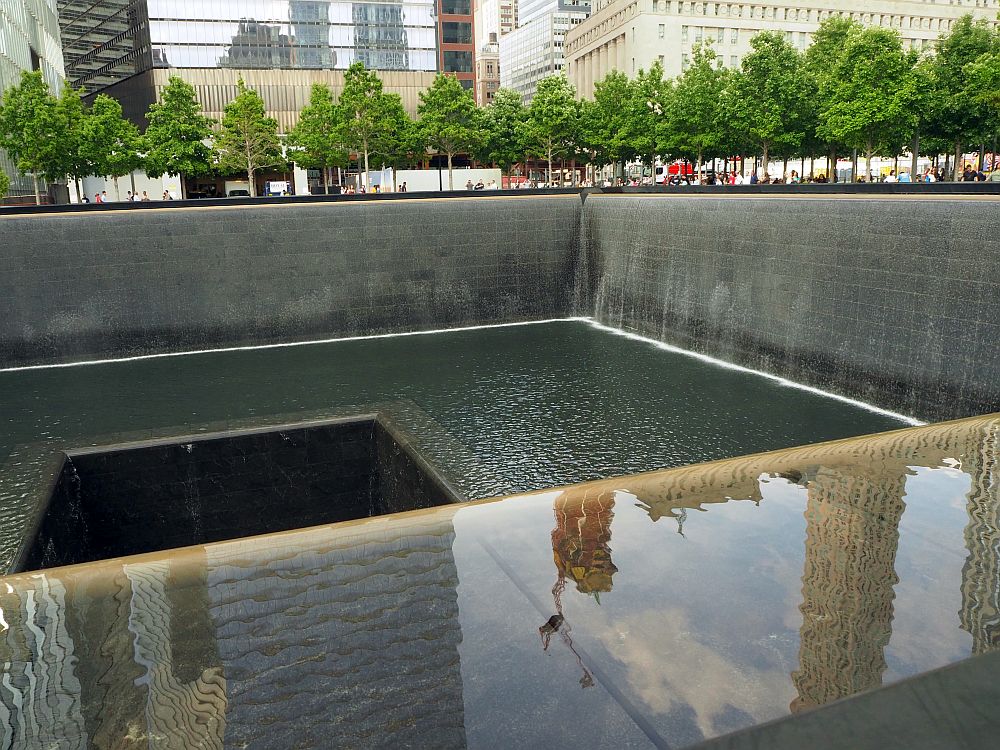
The 9/11 memorial reflects the gaping holes in the ground left by the collapse of the towers. Its focal point, a fountain, is a hole in the same ground, or rather two. They are not as big or deep as the original footprints of the two towers that collapsed, but mirror that negative space remarkably effectively. Surrounding the square holes is a bronze frame (called parapets in the tourist brochure), engraved with the names of those who died in the towers, on the flights and on the ground.
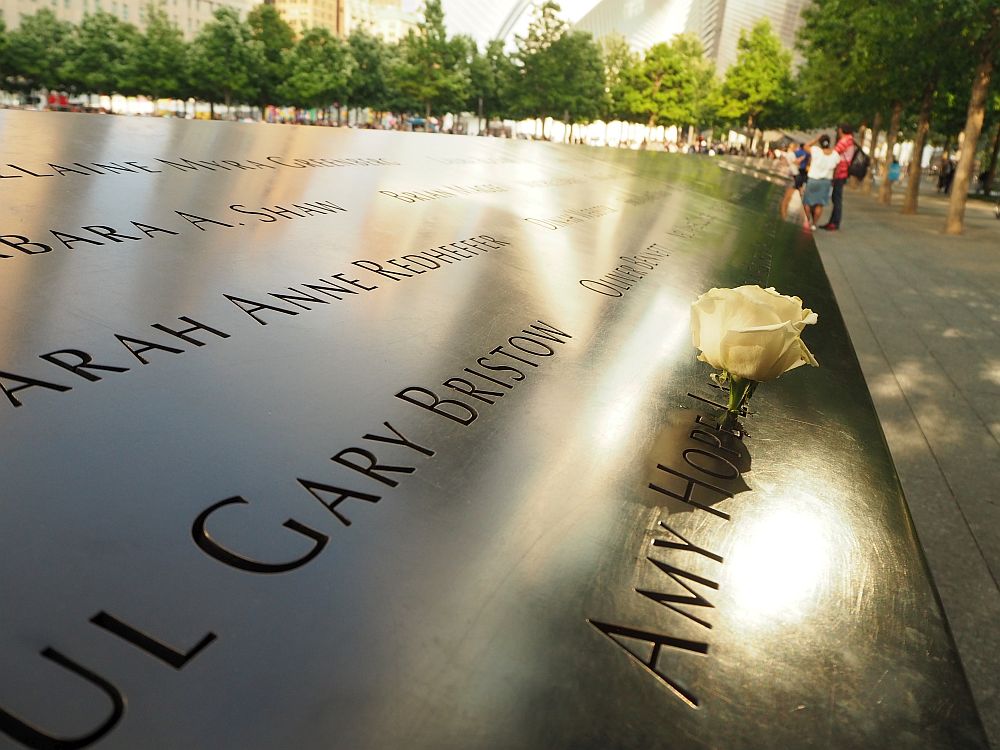
From ground level on all four sides, waterfalls flow in smooth sheets into the black hole, 30 feet below. Then the water drains down a smaller square hole in the middle, so situated and so deep that from standing at the frame, even if you lean forward as far as possible, you can’t see the bottom of the hole. A figurative abyss.
Some people walked along the bronze frame, reading the names, touching them, noticing how the names of family members were placed next to each other. Others were taking pictures of the “survivor tree,” the only tree that survives from the original park on the World Trade Center site. Some sat on benches scattered around the site, and some were clearly fighting tears. So was I.
I don’t know anyone who died that day. I doubt many of the people who visit the memorial knew anyone who died that day. Yet we all grieve. I spent the rest of the day on my 2013 visit pondering why.
We may grieve when there are other tragedies: the Oklahoma City bombing in 1995, for example, or the massacre at Sandy Hook Elementary School. Yet we don’t make pilgrimages to where those tragedies happen. Many people, I expect, don’t even remember the Oklahoma City bombing anymore.
If we compare 9/11 to Sandy Hook or Oklahoma City, they all made us feel horrified and helpless and terribly, deeply sad. All of them were attacks on the innocent, and that touches us because we identify with the innocent.
Mourning 9/11
The difference, it seems to me, is the nature of the attack. While we mourn any such large-scale attack on the innocent, 9/11 was bigger, not just because more people died. Oklahoma City and Sandy Hook were both carried out by home-grown terrorists: Americans. 9/11, on the other hand, was an attack from outside.
America has been tremendously fortunate that, mostly just because of geography, it hasn’t been attacked on its own territory by other hostile countries, or at least not since Pearl Harbor. Before 9/11, America was supremely confident of its own strength and safety: its invulnerability.
9/11 destroyed that. Suddenly, every American felt vulnerable. While Americans identified with the victims in Oklahoma City and Sandy Hook as well, in this case they felt personally attacked. The 9/11 terrorists were aiming at every single American, and at their way of life. That typical American confidence is exactly what they were attacking, and they succeeded. America has changed.
So my view is that they’re not so much grieving the individual victims; they’re grieving for how they’ve lost their innocence. They’re grieving for themselves and the way America was.
Anyone who mourns a loved one they’ve lost will understand that grieving is a long process. And part of that process involves marking the loss in some way. When we’re talking about an individual person, that will usually involve visiting the cemetery where the person is buried, or some other location that was important in the person’s life.
This location in New York has become our gravestone: the marker for the way of life we are mourning. And more people visit it than will ever visit other tragedy sites because more people feel a personal, individual sense of loss for what has died.
You might also be interested in these articles:
Looking at 9/11 today
No matter how often the politicians insist that terrorism will not change the American way of life, they’re wrong. Something has changed, and coming to terms with our loss will take a very long time.
In my view, updating this article in 2026, the grief feels less immediate to me now. Yet everyone can describe exactly where they were on September 11, 2001, and how they felt. Repercussions from the attacks have reached all around the world as evidenced in military conflicts, immigration policy, and foreign policy, and not just for the US.
Meanwhile, events in the US have drawn attention to the threat of terrorism from within: from white supremacists, neo-Nazis, and other extremist groupings.
So now people feel threatened both domestically and from overseas.
The 9/11 Memorial site, revisited
In 2019, back in New York for a reunion, I decided to revisit the 9/11 Memorial site.
The 9/11 memorial plaza
The memorial plaza is just as moving as when I first visited. The trees around it have grown. I strolled around the fountain, touched by the sheer number of names. Here and there I saw roses next to the victims’ names, placed by memorial staff to mark their birthdays.
The One World Trade Center building
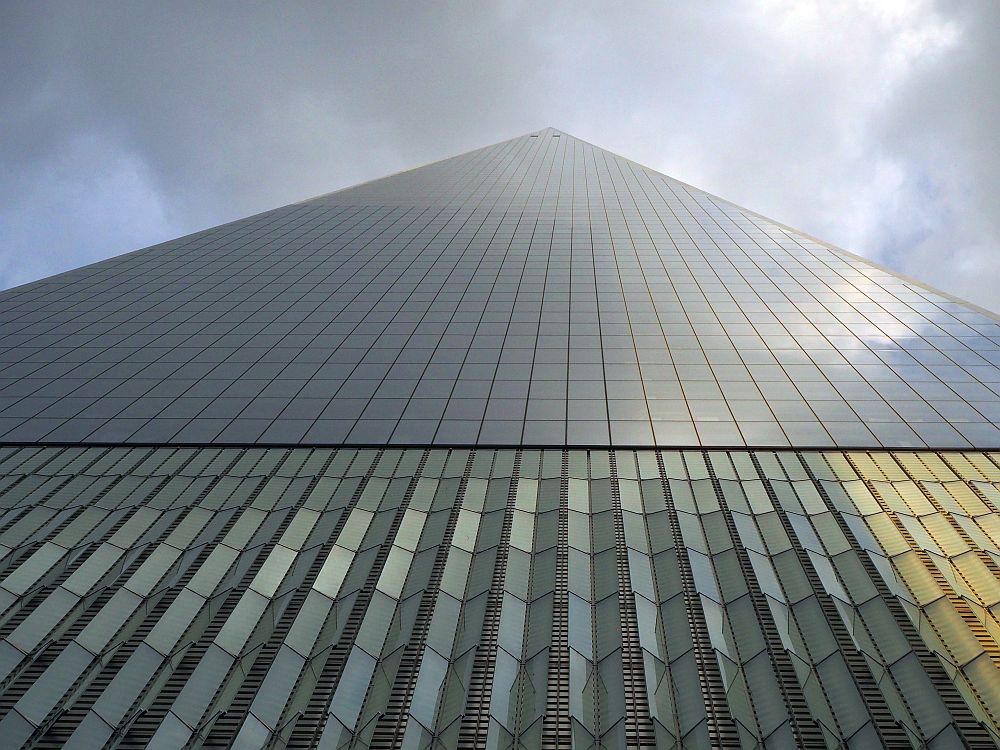
When we (a group of Dutch college students and I, their teacher) arrived in 2013, the driver of our shuttle pointed out the tallest, shiniest building, the new World Trade Center, and told us that it was 1776 feet tall, which led to a quick quiz from me about what that number meant. These students traveling with me had all taken my American Studies lessons, but only one had the right answer: “When the Declaration of the Independence was written.”
That figure isn’t exactly correct, by the way. The building itself is shorter; it’s the mast on the top that reaches a few feet past 1776.
Book your accommodations in New York City.
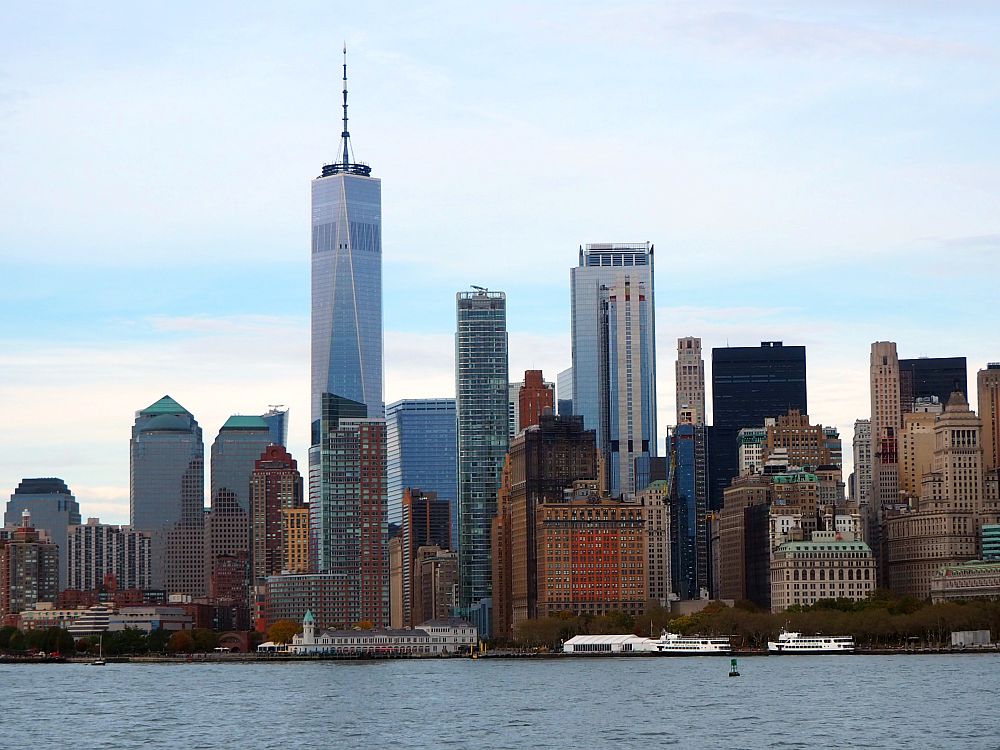
In 2013 the new One World Trade Center tower, sometimes called the Freedom Tower, wasn’t yet completed. By the time I visited again in 2019, it had opened. Below it is a museum; at the top is the “One World Observatory,” one of the best observation decks in New York City. I chose the frivolousness of the view from the top over the mournfulness of the museum.
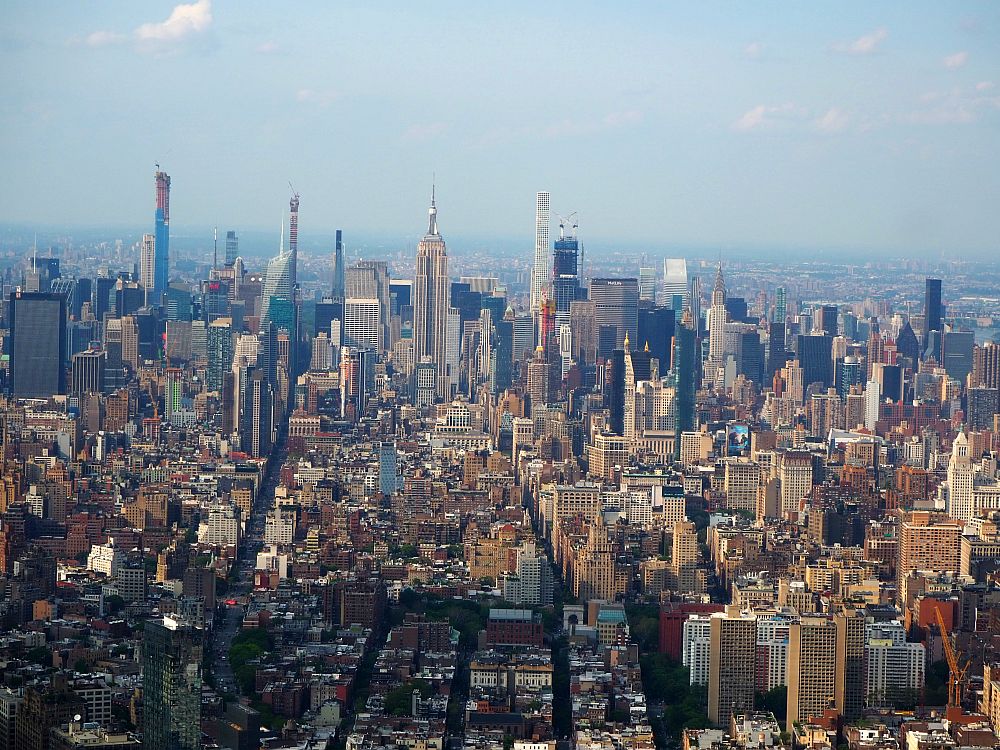
From up there the views of the city are stunning, and you can walk clear around the sides to see the views in all directions.
Other buildings are complete now too: several shiny glass-sided office buildings surround the memorial plaza, none as tall, though, as One World Trade Center.
The Oculus
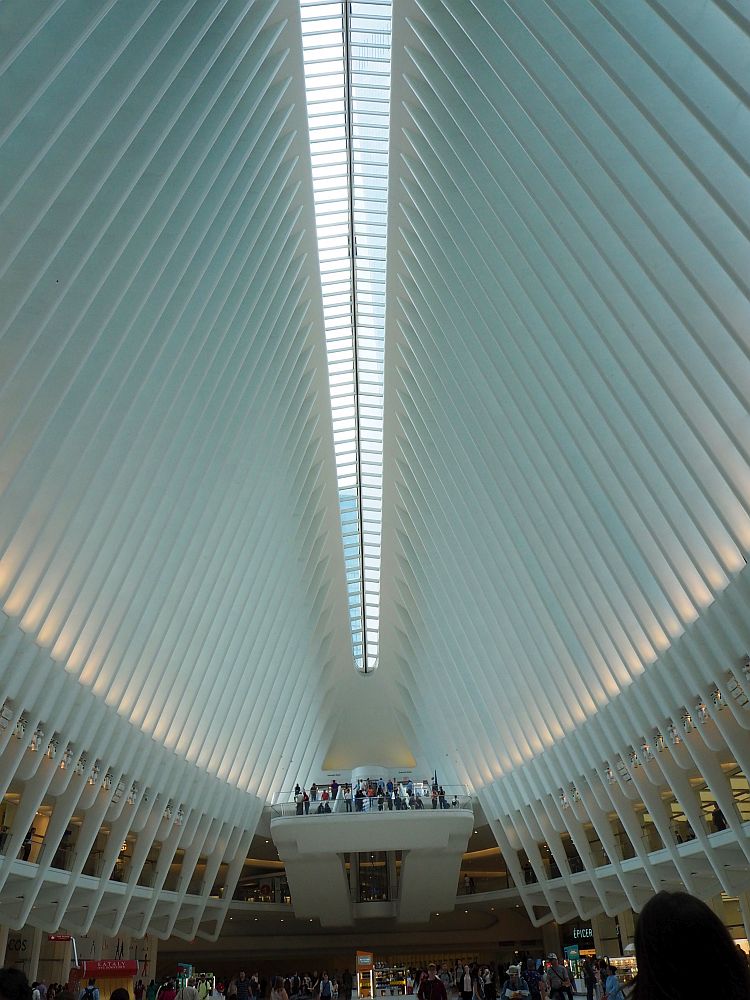
Built to replace the commuter train and subway station that was destroyed on 9/11, the new transportation hub called the Oculus is particularly striking. Its soaring curved lines in the central hall remind people of their smallness in such a cavernous space, even among crowds of commuters.
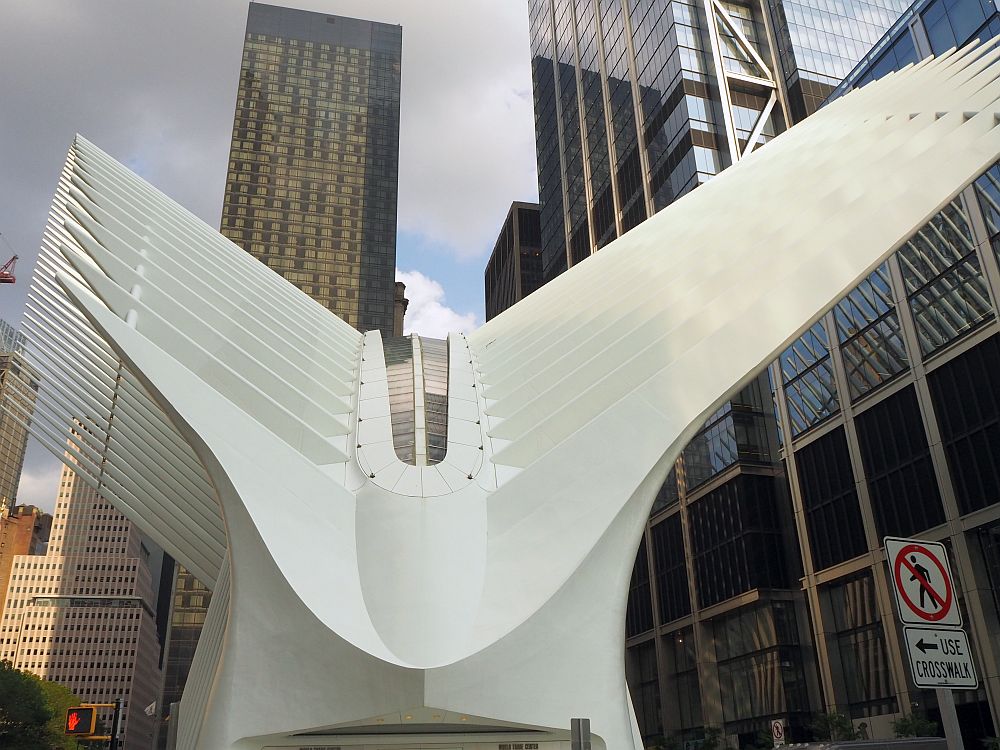
An interesting element of the Oculus’s design explains its name: Oculus means “eye” in Latin: the long slit of windows along the center ceiling is the eye. Looking up from inside, you can see One World Trade Center. On September 11 each year from 8:46 (the time when the first plane hit a tower) until 10:28 in the morning, (when the second tower went down), the sunlight shines directly into the Oculus.
Practical information
9/11 Memorial Plaza
The plaza is definitely worth spending some time in. Make sure to see the 9/11 Memorial itself, with its waterfalls and inscribed names.
Nearby, the Memorial Glade is dedicated to the first responders and survivors who were affected by the toxins released by the collapse building. It includes six massive monoliths that incorporate steel from the destroyed towers.
Download an audio guide to the memorial here.
Memorial Plaza: 180 Greenwich Street. Any of the following subway stops are within a few blocks: Chambers Street, Fulton Street, Park Place, World Trade Center, Rector Street, Cortland Street or WTC Cortlandt. Entrances at Liberty Street and Greenwich Street, Liberty Street and West Street, or West Street and Fulton Street. Open daily 8:00-20:00. Admission: free.
The 9/11 Museum
The 9/11 Museum is part memorial, part informational. The above-ground entrance, a large glass-walled structure, incorporates elements of the original tower. The rest is underground and, in it, other remnants of the original structure remain in two large halls. An exhibition tells the story of 9/11 through interactive technology, images, and multimedia. It covers what happened on the day, but also the historical background and the aftermath.
A memorial exhibition honors the people who died in the 9/11 attacks and also the six people who died in an earlier bombing in 1993. Photos of all the victims cover the walls, and another room shows profiles of individuals who died, along with artifacts of their lives.
Temporary exhibitions focus on other elements of the 9/11 story or its repercussions.
The 9/11 Museum: 180 Greenwich Street. Any of the following subway stops are within a few blocks: Chambers Street, Fulton Street, Park Place, World Trade Center, Rector Street, Cortland Street or WTC Cortlandt. Open Wednesday-Monday 9:00-19:00 and some Tuesdays. Closed on September 11. Admission: $36, but on Monday afternoons 17:30-19:00 the tickets are free – the free tickets are available on a first come, first served basis through their website starting that same morning at 7:00. Reserve your tickets to the 9/11 Museum.
One World Observatory at One World Trade Center
You’ll see amazing views and some multi-media glitz at the observatory on the 102nd floor. Choose a clear day for the best views.
One World Observatory: 117 West Street. Nearby subway stations: Chambers Street, Fulton Street, World Trade Center, Cortland Street or WTC Cortlandt. Open 9:00-21:00 but this may change seasonally. Admission: $44 for seeing the view, more if you want various other perks. Book your visit to the One World Observatory.
If you want to see both the museum and go up in the tower, take a look at this combination tour. It includes a guided tour of the memorial and admission to the museum and the One World Obsrvatory.
The Oculus
Besides being a stop for the PATH trains to New Jersey and connecting to a number of subway lines, the Oculus also has lots of shops and places to pick up a bite to eat.
The Oculus: 50 Church Street. Take the subway 1 train to WTC Cortlandt stop; 2, 3, 4, 5, A, C, J or Z to the Fulton Street stop; the E train to World Trade Center; or the R or W to Cortlandt. Open daily 5:00-01:00. Admission: free.
Have you visited the 9/11 memorial site? Please share your thoughts below!
My travel recommendations
Planning travel
- Skyscanner is where I always start my flight searches.
- Booking.com is the company I use most for finding accommodations. If you prefer, Expedia offers more or less the same.
- Discover Cars offers an easy way to compare prices from all of the major car-rental companies in one place.
- Use Viator or GetYourGuide to find walking tours, day tours, airport pickups, city cards, tickets and whatever else you need at your destination.
- GetTransfer is the place to book your airport-to-hotel transfers (and vice-versa). It’s so reassuring to have this all set up and paid for ahead of time, rather than having to make decisions after a long, tiring flight!
- Buy a GoCity Pass when you’re planning to do a lot of sightseeing on a city trip. It can save you a lot on admissions to museums and other attractions in big cities like New York and Amsterdam.
- Ferryhopper is a convenient way to book ferries ahead of time. They cover ferry bookings in 33 different countries at last count.
- I’ve become an affiliate for VisitorsCoverage travel insurance, mostly because you should ALWAYS have travel insurance when you travel! You may be young and healthy and never get sick, but the fact is, sh*t happens, and it’s worse if you don’t have insurance!
Other travel-related items
- Get an e-sim! It’s really awkward to have to rely on WIFI when you travel overseas. An e-sim is a great alternative to paying high roaming fees for your home provider. Both GigSky and Holafly have worked well for me, so it’s worth comparing them. Holafly offers unlimited data, but if you won’t use that much, GigSky might be more cost-effective. For both companies, I’ve sometimes needed help from their customer service to get the e-sim working, but both companies have great customer service, so it wasn’t a big deal. Download either of their apps and activate it when you need it.
- Another option is a portable wifi modem by WifiCandy. It supports up to 8 devices and you just carry it along in your pocket or bag! If you’re traveling with a family or group, it might end up cheaper to use than an e-sim. Use the code RACHELSRUMINATIONS for a 10% discount.
- I’m a fan of SCOTTeVEST’s jackets and vests because when I wear one, I don’t have to carry a handbag. I feel like all my stuff is safer when I travel because it’s in inside pockets close to my body.
Rachel Heller is a writer living in Groningen, the Netherlands. She is the owner and primary author of this website, Rachel’s Ruminations, a travel blog focused on independent travel with an emphasis on cultural and historical sites/sights. Read more here about her and about this website. All photos in her articles are her own, unless otherwise specified. Rachel also owns and operates a website about World Heritage travel.
Trauma and grief are such difficult issues. Thank you for sharing a thoughtful post on grappling with the unthinkable.
I remember where I was that day… I was 19, and it was the first time I there was a greater world of violence and hatred and that all humans are vulnerable…
This is a really wonderful essay.
As someone who doesn’t live in the US, I hadn’t even heard of the other tradgedies. But I think we all know of the 9/11 attacks. I can still remember where I was that day, when I first found out. It was such a shock!
Lovely description of the memorial. It sounds fitting.
Rinelle Grey
Thank you for the thoughtful blog post. It is a huge and multifaceted topic. Grief takes time for the person and the country. 9/11 profoundly affected this country. Many of our right and liberties have been taken away in the name of security. Look at the Patriot act.
The best security we have is love and respect. We have to teach ourselves and and our young. When we can love and respect each other world wide, then there will never be another 9/11 or Newtown.
What a deeply touching experience. Very honoring. Thank you for sharing it with us!
“So my view is that they’re not so much grieving the individual victims; they’re grieving for how they’ve lost their innocence. They’re grieving for themselves and the way America was.”
I agree with your opinion. I’ve said something similar under other circumstances. Thanks for an insightful post. Blessings
Thank you all for reading!
Very impassioned post. Thanks for sharing.
This is one of the most informative and insightful articles I’ve ever read on the 9/11 Memorial. Excellent job, Rachel!
Thank you so much, Penny!