

The High Line: An extraordinary, elevated New York City park
I like parks as much as the next person, but when I travel they’re not high on my list. I might pass through a park on the way to something else I want to see, or I might do a bit of people-watching in a park long enough to eat a sandwich, but that’s about it. They don’t interest me much. The High Line, however, is a truly extraordinary park in New York City: definitely worth visiting.
[Last updated September 6, 2026]
Disclosure: This article contains affiliate links. Making a purchase through an affiliate link will mean a small commission for this website. This will not affect your price. Privacy policy.
History of the High Line
The High Line was originally a railway line, opened in 1934: a cargo line that once served the Meatpacking District in lower Manhattan. For more than twenty years (1980 to 2006), its elevated length was simply abandoned, and gradually became overgrown with weeds.
In 1999, Friends of the High Line started a project to transform it into a park: up above street level, which is what makes it extraordinary.
The transformation of the High Line
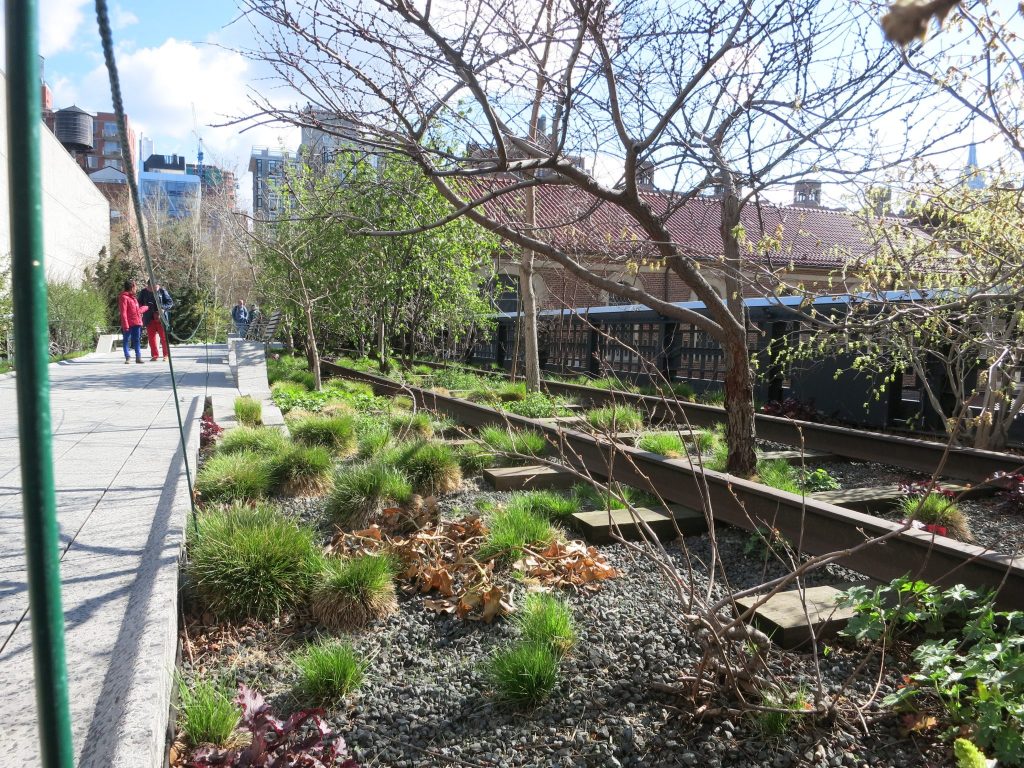
The design, for one thing, is lovely. The original tracks are incorporated into it, dotted with plants and trees and the occasional public art. Park benches seem to rise organically from the walking paths. In one part of the route, the walking path is elevated above the track level, which allows for a mini-forest to grow undisturbed. The trees were still relatively young and small when I visited. They’ll be larger by now, with less open space between them.
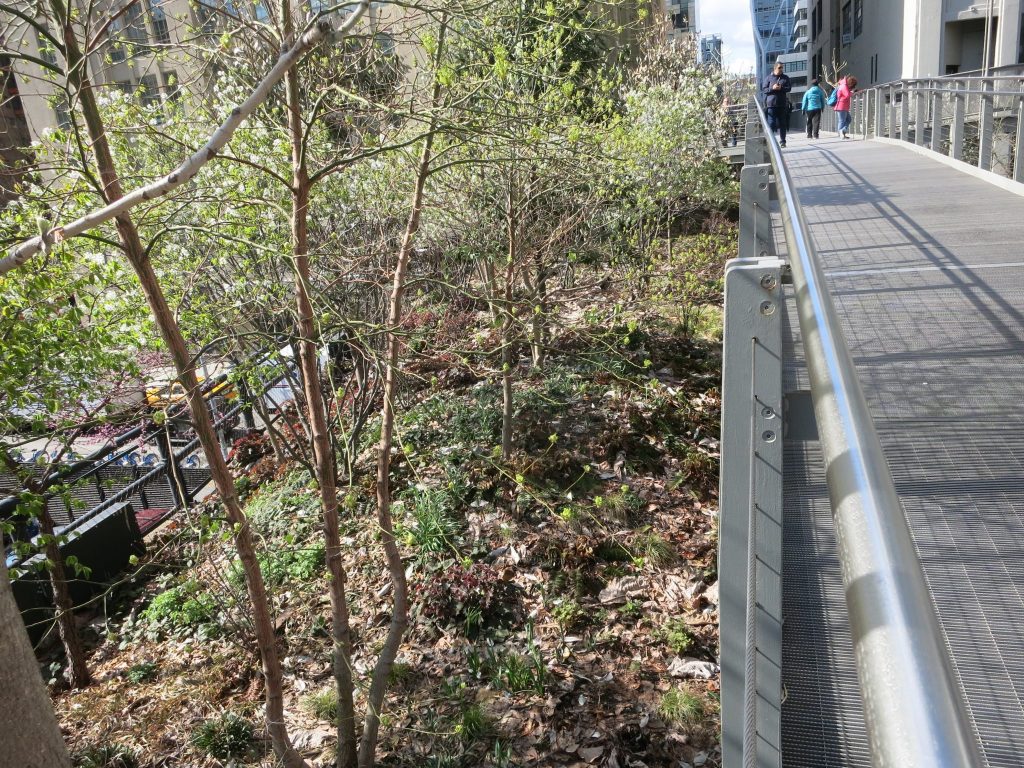
In other places the “ground” is carefully manicured, with lines of small shrubs. The plantings were chosen for their hardiness, and in many cases are the same plants that self-seeded in the years that the railway was abandoned.
For more ideas of things to see in New York City, check out my article “New York City on a Budget: Free or cheap things to do“! And here are some other articles that might help you plan your trip:
The High Line extends from Gansevoort Street in the Meatpacking District to 34th and 12th Avenue in the Hell’s Kitchen neighborhood, about 1.45 miles (2.33 km) away. Stairways and elevators allow access at different points along its length.
What you’ll see along the High Line
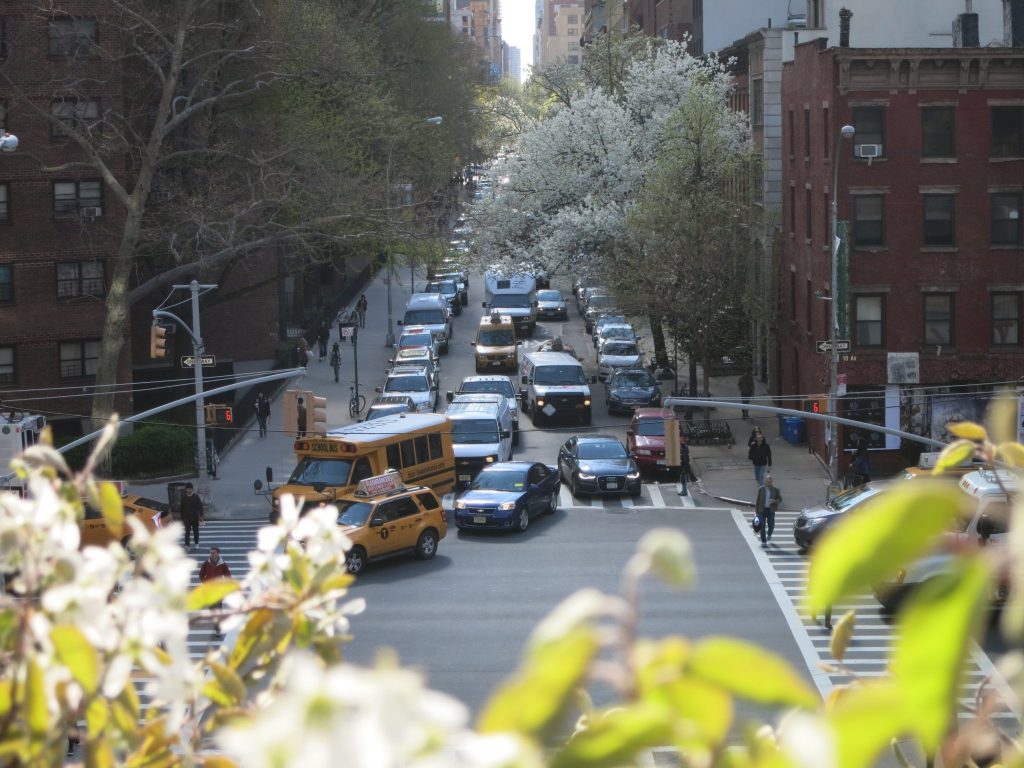
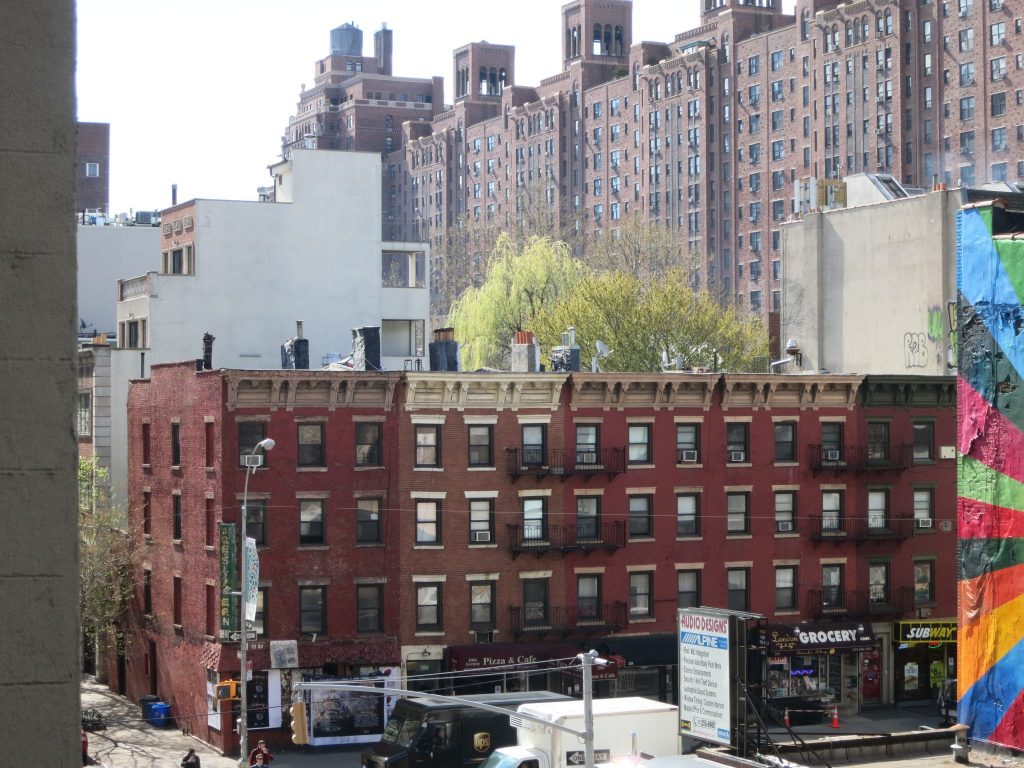
It’s a fascinating walk. In some places the buildings extend over the park. In others, there are overlooks where you can stop and take in the views. These aren’t the epic views of further uptown, full of skyscrapers. These are more focused views: an ordinary intersection or a row of buildings or a glimpse of the Hudson River. That kind of view makes you notice details more, like the way the trees were flowering when I was there, or how the traffic moved – or didn’t move – through intersections, or the assortment of small businesses on a side road.
Don’t forget to book your accommodations in New York City. On one of my visits, I stayed at what is now called the West Village Eurohostel, an affordable option in an expensive city. It’s only a couple of blocks from the southern end of the High Line at Gansevoort and Washington Streets.
Gentrification
I walked in the Meatpacking District to get to the southern end of the park, and that area showed some fascinating contrasts even before I climbed the stairs to the park itself. The old meatpacking industries were still there: small, simple warehouses whose fronts are nothing but loading platforms, where men busily heaved boxes of, presumably, meat onto small trucks to supply the whole metropolitan area. But cheek by jowl with these old warehouses were new chic businesses in what used to be warehouses: designer shops, painfully stylish cafes and so on.
In late 2024, the last meatpacking businesses signed a deal to leave, making way for redevelopment. It’s still called the Meatpacking District, but it’s much more upscale today. Clearly, the arrival of the High Line contributed to this gentrification. I saw one newly-built condo apartment building overlooking the park with outrageous prices, for example.
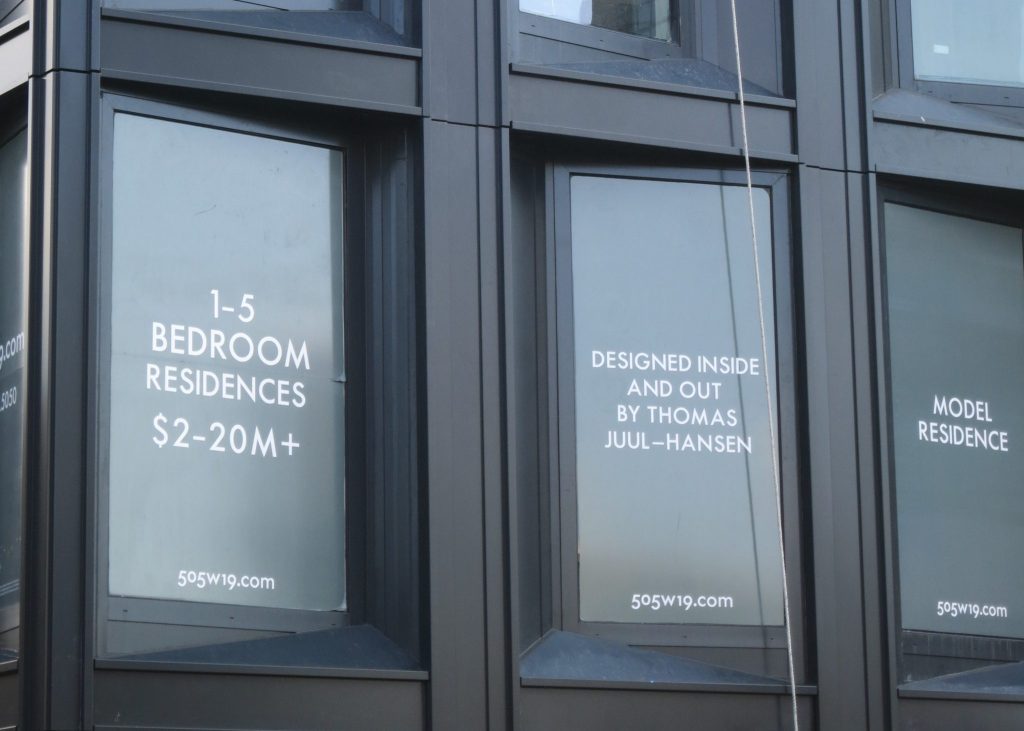
Despite the extreme example of gentrification, I think other cities could learn from this park. Of course, unless they happen to have a derelict elevated railroad track available, it’s not practical in the same form. However, there are roads in many cities that are practically abandoned. They’re off the commonly driven routes, or include sections where the local shops are dying because the shoppers have moved elsewhere.
I can imagine that this kind of landscaping – making it into a real park, rather than just a pedestrian street with a few benches and potted plants – could revive many down-and-out areas. They would become places where people want to be. Why doesn’t this happen in more places?
Other things to do on the High Line
Besides enjoying a relaxing stroll along the High Line, you can take part in a range of activities as well. The High Line’s events calendar lists things like Tai Chi and other fitness classes, tours, stargazing, and lectures. They’re free, but some require you to sign up ahead of time. Check the calendar on their website.
The High Line: Access along its length from the corner of Gansevoort and Washington Streets all the way up to 31st St. and Dyer Ave. Elevators at 14th St.; 23rd St.; 30th St. SW; and 31st St. and Dyer Ave. Subways A, C, E, 1, 2, 3 and 7 will all get you near to it somewhere along its length. Open daily December-March 7:00-20:00 and April-November 7:00-22:00. Admission: free. Website.
My travel recommendations
Planning travel
- Skyscanner is where I always start my flight searches.
- Booking.com is the company I use most for finding accommodations. If you prefer, Expedia offers more or less the same.
- Discover Cars offers an easy way to compare prices from all of the major car-rental companies in one place.
- Use Viator or GetYourGuide to find walking tours, day tours, airport pickups, city cards, tickets and whatever else you need at your destination.
- GetTransfer is the place to book your airport-to-hotel transfers (and vice-versa). It’s so reassuring to have this all set up and paid for ahead of time, rather than having to make decisions after a long, tiring flight!
- Buy a GoCity Pass when you’re planning to do a lot of sightseeing on a city trip. It can save you a lot on admissions to museums and other attractions in big cities like New York and Amsterdam.
- Ferryhopper is a convenient way to book ferries ahead of time. They cover ferry bookings in 33 different countries at last count.
- I’ve become an affiliate for VisitorsCoverage travel insurance, mostly because you should ALWAYS have travel insurance when you travel! You may be young and healthy and never get sick, but the fact is, sh*t happens, and it’s worse if you don’t have insurance!
Other travel-related items
- Get an e-sim! It’s really awkward to have to rely on WIFI when you travel overseas. An e-sim is a great alternative to paying high roaming fees for your home provider. Both GigSky and Holafly have worked well for me, so it’s worth comparing them. Holafly offers unlimited data, but if you won’t use that much, GigSky might be more cost-effective. For both companies, I’ve sometimes needed help from their customer service to get the e-sim working, but both companies have great customer service, so it wasn’t a big deal. Download either of their apps and activate it when you need it.
- Another option is a portable wifi modem by WifiCandy. It supports up to 8 devices and you just carry it along in your pocket or bag! If you’re traveling with a family or group, it might end up cheaper to use than an e-sim. Use the code RACHELSRUMINATIONS for a 10% discount.
- I’m a fan of SCOTTeVEST’s jackets and vests because when I wear one, I don’t have to carry a handbag. I feel like all my stuff is safer when I travel because it’s in inside pockets close to my body.

Rachel Heller is a writer living in Groningen, the Netherlands. She is the owner and primary author of this website, Rachel’s Ruminations, a travel blog focused on independent travel with an emphasis on cultural and historical sites/sights. Read more here about her and about this website. All photos in her articles are her own, unless otherwise specified. Rachel also owns and operates a website about World Heritage travel.
We love the High Line. It’s a great place with kids because they can run free without fear of the traffic below. We also like the Promenade Plantee which it was based on in Paris. I read recently that my parent’s hometown of Philadelphia has plans to turn some of Fairmount Park into a High Line sort of thing. The revolution may be coming!
I’ve never been to the one in Paris, but it’s good to hear that the idea is spreading! Thanks for commenting!
When they buried the highway in downtown Boston (THe Big Dig), they turned the empty space into a string of parks, opening up the city to the waterfront. The result is wonderful and has encouraged new development to the old downtown.
A good example. Did the property values go up to $2m for a 1-bedroom apartment?