

The Biosphere Expeditions effect: Why people keep coming back
After two experiences this year on Biosphere Expeditions projects, I think I can safely vouch for the value of their work. This non-profit recruits participants – called “citizen scientists” to support researchers by helping them collect more data than they’d be able to do on their own.
While the list of Biosphere projects has changed over the years, all of them involve wildlife conservation: monitoring one or more species. The results can be used for things like advising governments about policies that affect those species.
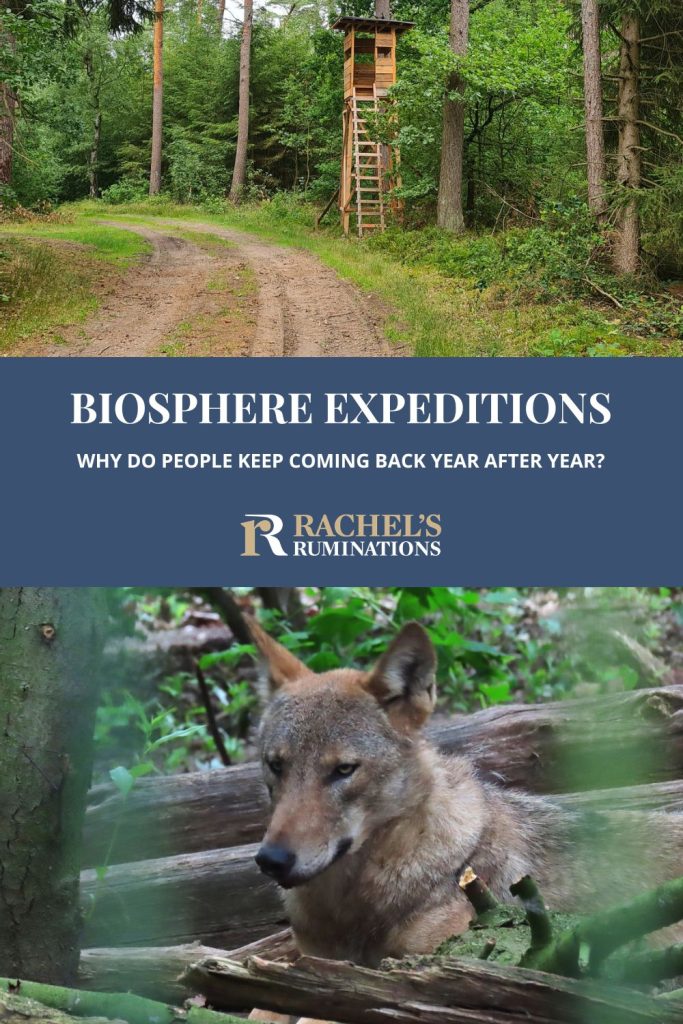
The two I’ve participated in focused on whales and dolphins in the Azores – see my article here – and, later the same year, a project studying wolves in Lower Saxony, Germany.
Note: Biosphere Expeditions partially sponsored me for both projects. They waived the participant fee, but I paid for transportation to and from the expeditions and, in the case of the Azores project, I also paid my own hotel nights before and after.
Disclosure: This article contains affiliate links. Making a purchase through an affiliate link will mean a small commission for this website. This will not affect your price. Privacy policy.
What Biosphere’s citizen scientists do
All of these projects ask a lot of the people who join up. The Azores trip I took meant spending hours every day on a boat on the Atlantic Ocean, even in heavy seas and rainy weather. The wolf project meant walking 10-20 kilometers (6-12.5 miles) every day.
Other projects ask even more. The snow leopard project in the Tien Shan mountains in Kyrgyzstan involves staying at a base camp at 3000 meters’ elevation (9850 ft) and lots of mountain walking from there. The Maldives coral reef study, while offering comfortable live-aboard accommodations, requires multiple dives a day to observe transects along the reefs.
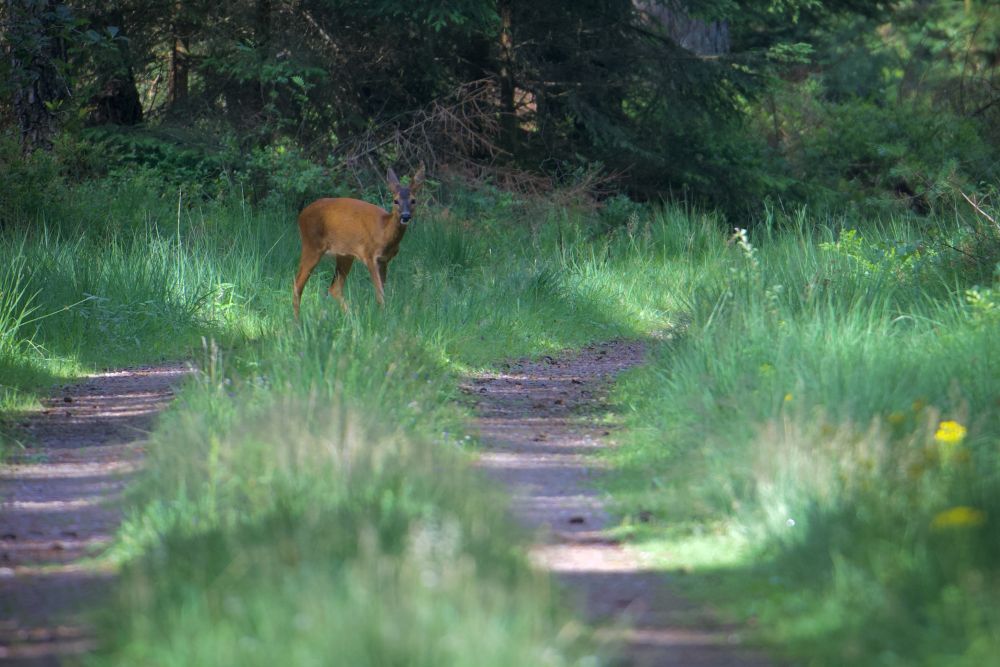
In other words, these projects are work; they demand time and energy from the participants, who also pay for the privilege. Their financial contribution covers a) their room, board, transportation and an expedition leader during the project and b) some of the research itself and the necessary equipment.
Participants also arrange their own transportation to the starting point; Biosphere is not a tour company.
Why take part in a Biosphere Expeditions project?
Knowing about the effort, energy and money that citizen scientists spend to take part, I was surprised to meet, on the wolf project, several people who’ve joined lots of these projects; for one of them, this was his 19th!
Why, though? Why do people join Biosphere Expeditions projects over and over?
Below are reasons these dedicated citizen scientists offered. For each one, I’ve added my thoughts and examples, particularly in terms of the wolf project.
If you prefer a video, I made the reel below for Instagram. I asked some of the “frequent fliers” I met on the wolves expedition in Germany for a short answer to the question “Why do you keep coming back?”
1. Purpose: the usefulness of citizen science
The research supported by Biosphere Expeditions is not just an activity to keep travelers busy and entertained, something I’ve criticized before about many so-called “voluntourism” companies – see my article about voluntourism. It has a purpose: either a question that needs answering or a longer-term effort to keep tabs on the welfare of a particular species.
The wolf project in Germany, for example, aims at determining what the wolves in Lower Saxony are doing. How many are there? Where are they? And, most importantly, what are they eating? Their location and numbers are important to know because they are a protected species and the EU requires reports about their situation. What they eat is useful information to counter groups in the area that lobby against the presence of wolves, claiming that they are a danger to livestock and people. Science-backed information can help policymakers to set regulations about creating nature reserves and inform how they deal with conflicts of interest between species protection and economic activity.
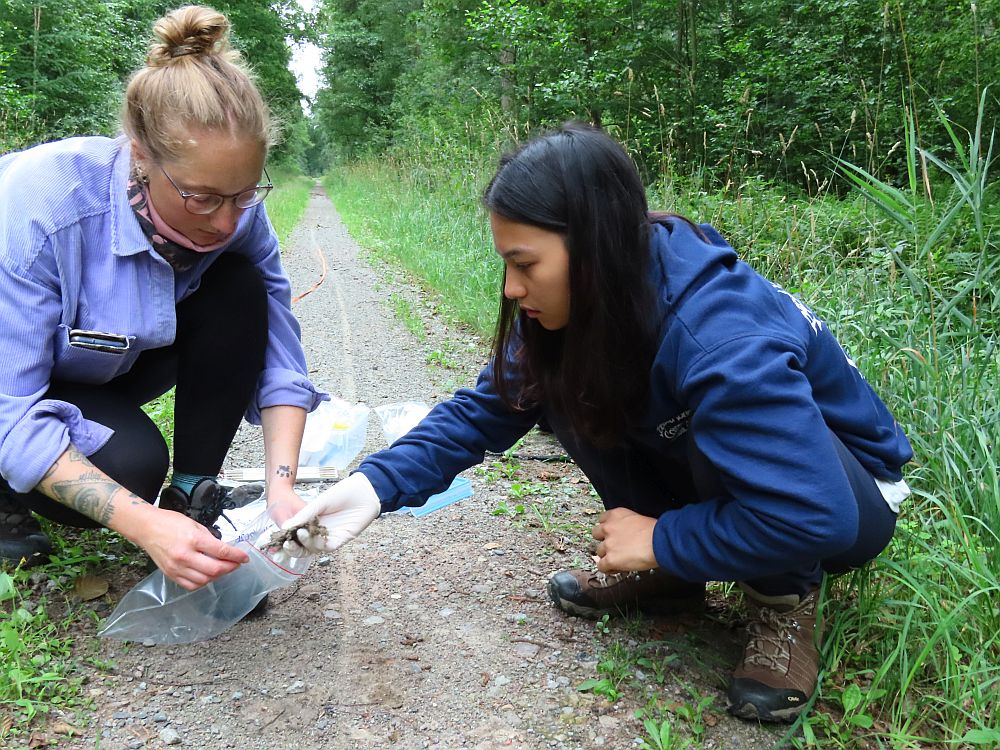
So what did we, the citizen scientists, do? After a day of training, the scientist on the project assigned every pair of participants an area of about 10 square kilometers somewhere in Lower Saxony. Together, the two of us walked the forest paths together – often these were managed forests for logging – looking for wolf scat.
When we found any, we recorded information: GPS location, location of the scat in relation to the path, its age, its contents, and so on. We then collected it so that a lab could catalogue its contents to see what the wolf had eaten. If it was fresh, we also took a sample to send to a lab for genetic analysis. This identifies individual wolves, which in turn allows researchers to understand how wolves or whole packs move over time.
2. Contributing to wildlife conservation
In order to successfully protect species, data is necessary. While the few days that we walked in the forests doesn’t seem like much, every little bit of data helps to build a bigger picture. And it feels good to help, even if it’s just in a small way. All the participants, I’d wager, care deeply about nature and the environment. These expeditions are a way of contributing that goes further than the everyday things we all do.
3. Biosphere’s worthwhile mission
Several of the participants I spoke to mentioned Biosphere’s philosophy. Its website states “We fight for a more sustainable planet, which is under attack like never before, by empowering ordinary people to help with wildlife conservation and research through our international conservation expeditions, which unite the concepts of citizen science, ethical volunteering and expedition holidays.”
During our training day on the wolf expedition, our expedition leader, Malika, pointed out a very practical expression of Biosphere’s day-to-day message: “safety, science, and satisfaction, in that order.” Safety has the first priority, then science – the data collection – is second, and participant satisfaction is third. This made it very clear to me that while the organization cares about its citizen scientists, the mission is the science. We, the participants, might enjoy our time with the project, but we might not. This is not a tour; it’s volunteer work.
4. For the travel and adventure
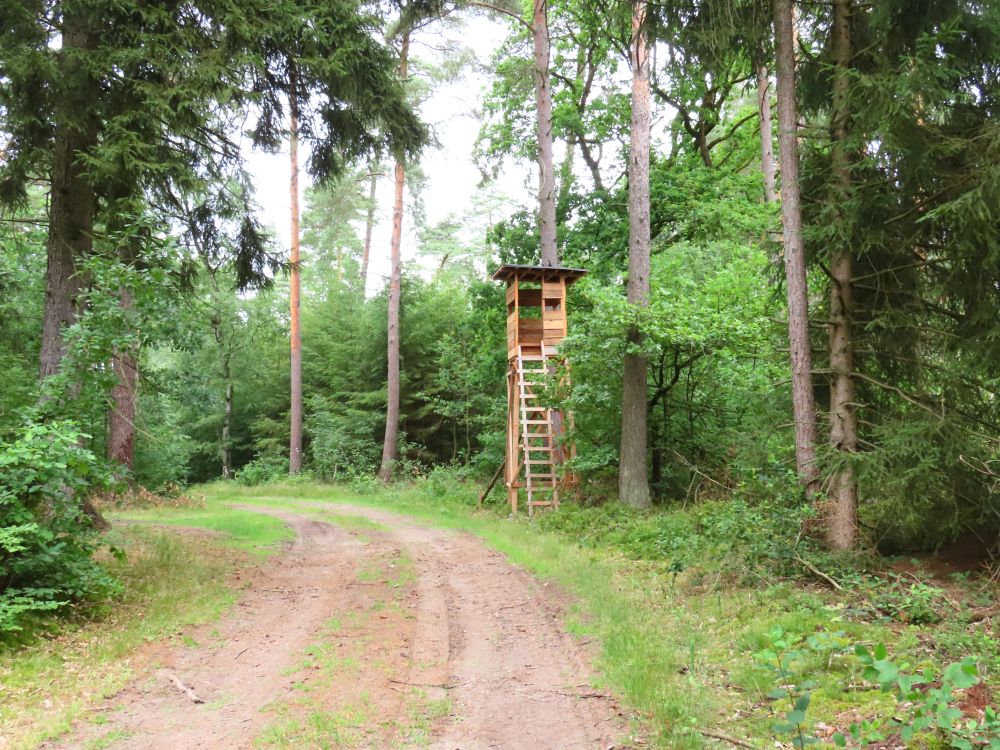
At the same time, the people who sign up for Biosphere Expeditions projects are often in it for the travel. It’s not really travel in the usual sense, though. Unlike many “voluntourism” experiences, the point isn’t the participants’ pleasure. You don’t go sightseeing or go out on excursions. Or rather, if you want to do anything outside of the project, you add days before or after to go travel on your own.
Yet the locations where these projects take place are, in many cases, very remote. For a traveler who enjoys being out in nature and doesn’t just want to tick items off a sightseeing bucket list, a Biosphere project offers a much more embedded look at a non-touristy location. Forest paths in Lower Saxony are not high on any Germany tourism list. Neither is Faial Island in the Azores, where I went on the whales project. Or the Tien Shan mountains in Kyrgyzstan or Vwaza Marsh in Malawi (I have been to that last one, but only because I lived not too far from there in Malawi for two years.)
In other words, it’s a great option for a person who wants to see a place that most other people have never even heard of, never mind visited. It’s an adventure.
5. To be and stay active
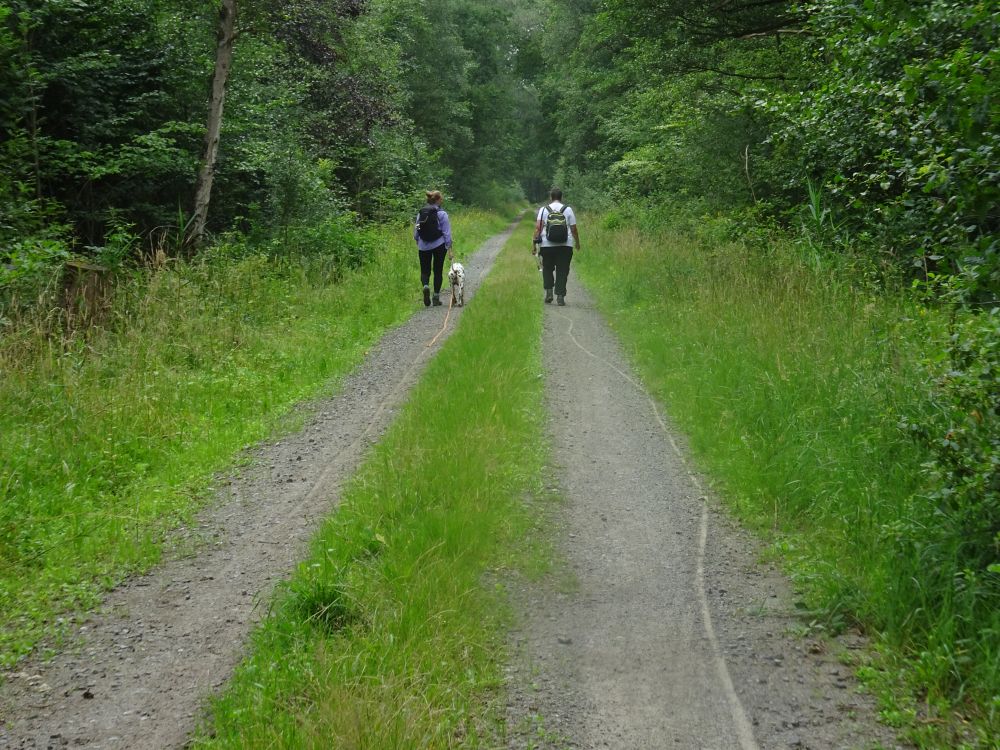
There’s little time to just laze around during a Biosphere Expeditions project, though I did notice that many participants go to bed quite early. I know I was ready for bed much earlier than I am at home.
These projects can be physically demanding, some more than others. I am not at all fit. I first signed up for the Azores project because it seemed to me the least difficult of Biosphere Expeditions’ offerings. It turned out, however, that it took a lot out of me when the swells were at their highest. Just the effort to stay seated or standing on that boat was exhausting. It was very much worth it, though, for the whale and dolphin sightings I enjoyed between carrying out whatever data collection task I’d been assigned.
I was worried before the wolf expedition that the 10-20-kilometer walks would be hard for me. Over the weeks leading up to it, I made an effort to take a long walk every day, and that certainly helped. Fortunately, the landscape of Lower Saxony is relatively flat, and because we were scanning the path for wolf scat, our walking pace was quite slow. It turned out that it was no problem for me. And, of course, for anyone who goes hiking a lot, it wasn’t difficult at all.
Most of the current projects – in South Africa, Malawi, Sweden and Kyrgyzstan – involve a lot of walking, with the Kyrgyzstan one being the most mountainous. The Maldives project requires scuba diving several times a day, a very tiring activity as well.
One of the participants who has been on many of these projects noted that it added an incentive to keep fit between trips as well.
6. To learn about wildlife and the scientific process
Taking part in these expeditions means you learn a lot about how fieldwork is done. I had heard about the wolves in Germany mostly from news reports here in the Netherlands when people spot wolves – they crossed into the Netherlands from Germany about 10 years ago.
How do people know, though, how many wolves there are? Or whether they’re a danger to livestock or people? How do we know that sperm whales migrate across the Atlantic? How do we know when animal populations increase or decrease? These sorts of questions are answered, I see now, through detailed, slow, painstaking research by scientists, grad students and participants in projects like these. The databases where the information is recorded can be useful over many years to track the progress of various species and to inform future research.
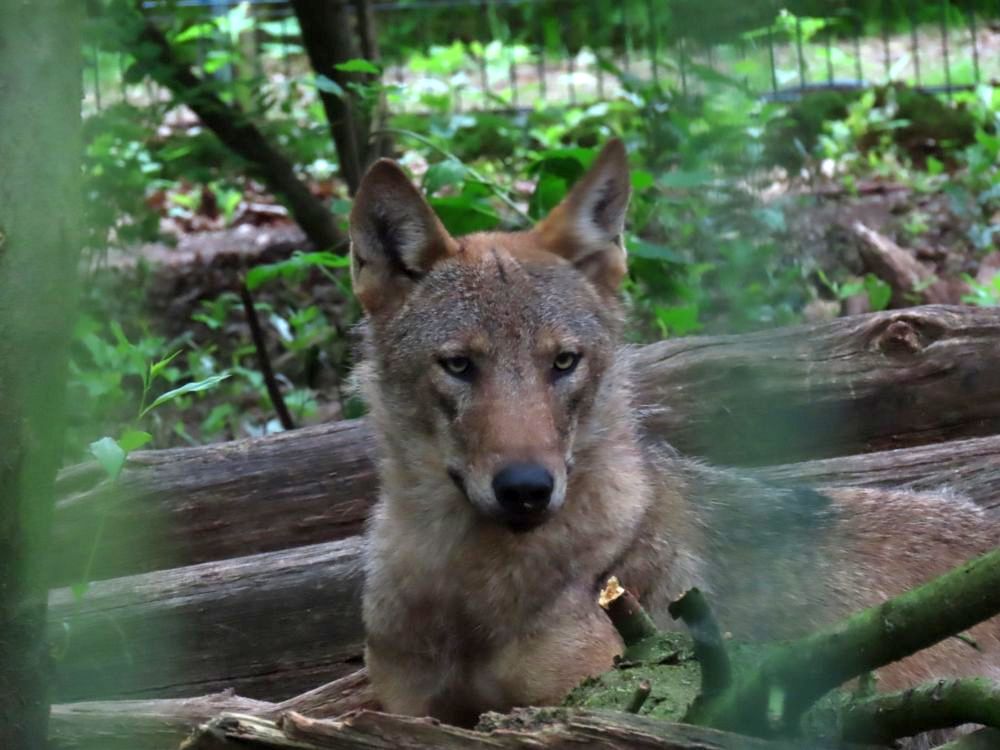
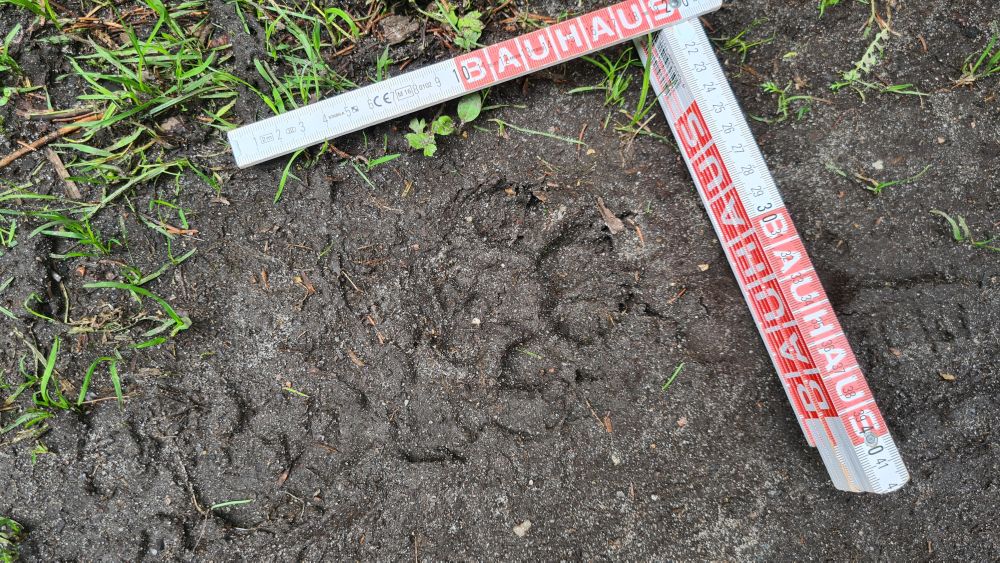
Besides a general look at how field research happens, you also learn about the particular species you’re helping study. In Lower Saxony, we didn’t see any actual wolves – they’re very shy creatures – but we learned how to identify their pawprints and scat. As part of our first day of training, we visited the Wolfcenter Dörverden. There, we saw various species of captive wolves in enclosures and learned a bit about their habits.
On the Azores expedition we learned to spot and identify several different species of whales and dolphins. In a series of evening informational sessions, we heard from researchers about the conclusions they’ve been able to draw from the decades of data that’s been collected about whales and dolphins in the Atlantic.
7. The organization of Biosphere Expeditions projects
The repeat participants also pointed out the quality of the organization itself. Biosphere makes it very clear that it is not a tour company and will not organize travel for the participants. We were simply told a starting point and time and had to take responsibility for arranging travel to get there.
Once the expedition starts, though, at the given location and time, Biosphere Expeditions takes over. It arranges housing – which can range from the most basic tents to quite comfortable guest houses – and meals, which are strictly vegetarian. All of it is very well-organized, and the expedition leader sets the expectations and routine for the participants. They may be expected to share a room or to take turns in various chores.
The first day or two are for training. Participants learn safety procedures as well as getting introduced to the tasks they’ll be doing. For example, participants may have to enter data in an app or fill it in on a paper form. They learn how to use equipment like walkie-talkies or GPS devices and what to do with them on return to base. They learn how to take samples, if that is part of the project, and they might also learn how to enter the data they’ve collected into a database.
The scientist on the expedition also takes part in the training, particularly to share information on the species to be studied.
Before the trip, each participant receives a very detailed brief to read, so they’ll already understand the purpose of the expedition. This training, then, helps link theory to practice.
Participants receive other information ahead of time as well. I found, on both trips, that the packing list I received was very well thought out. You also receive the contact emails of other participants, which could be useful for things like sharing a taxi on arrival at the nearest airport, and the phone number of the expedition leader, just in case there’s a problem.
8. To meet like-minded people
On my first Biosphere Expeditions project in the Azores, my biggest worry ahead of time was sharing my room with someone I didn’t already know. It turned out not to be a problem at all. In fact, I would have been fine with sharing with any one of the women on that trip.
People who sign up for Biosphere projects are, as one of the “frequent fliers” I interviewed said, “lovely people from around the world.” They all care about wildlife conservation and they’re all intrepid enough to step into a situation that most travelers never experience. They want to help and don’t expect coddling. They’re serious about contributing to the project, but not afraid to enjoy a laugh and a beer together at the end of the day. They’re just simply good people. So are the expedition leaders and the scientists.
They’re also quite international. On the Azores trip I did, the group included quite a few Europeans (British, German, French and me from the Netherlands), an Australian and an American. Similarly, on the Lower Saxony trip, we had a lot of Europeans (British, German, and me), but also a father-daughter pair from Thailand, an Australian, and an American. The operating language is English and they are all indeed lovely people, some of whom I expect will remain friends for years to come.
9. Time away from screens
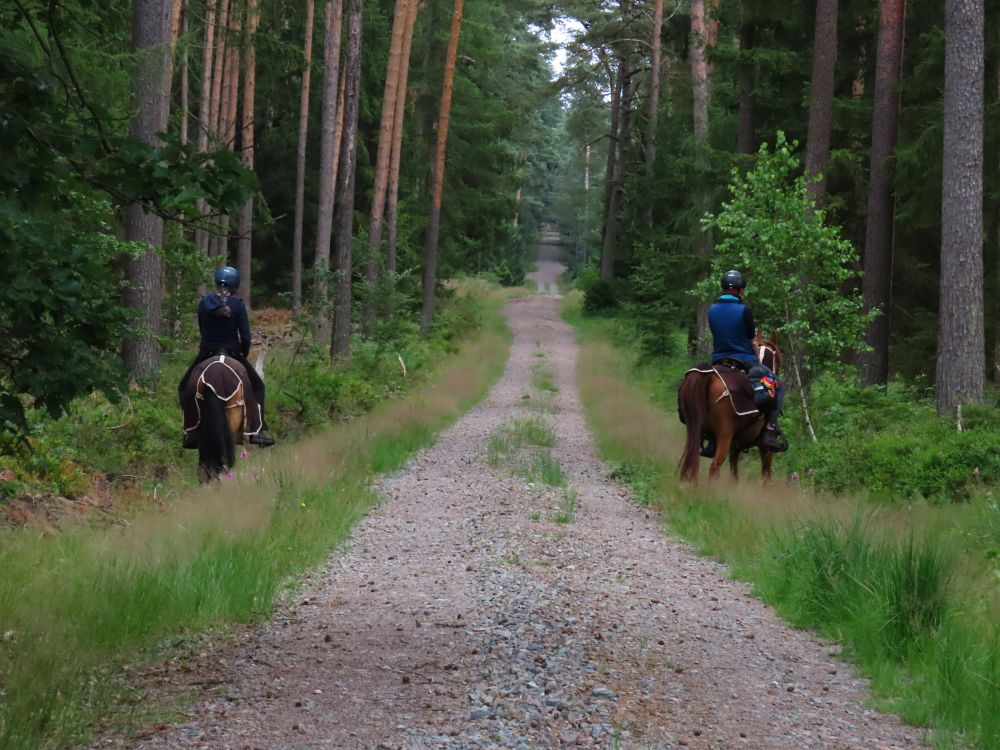
None of my fellow participants mentioned this, but I would argue that it’s another reason to keep coming back: reduced screen time. I admit that I spend far too much time on screens, either working or doom-scrolling. On both the expeditions I’ve taken part in, I had little or no reception while I was out in the field (or ocean, in the case of the Azores). In both places I could – and did – get online when I was back at base, but I spent much less time on a screen than normal.
I’m generally very reluctant to be out of reach for days at a time because I would worry that someone in my family might need to reach me, or that some catastrophic internet failure or hack would crash one or both of my websites. But being out of reach for work hours felt fine, and even a bit freeing.
10. Good for solo travel
Most of the people I’ve met on these expeditions are traveling solo. That doesn’t mean they’re single – some are, but others left partners at home. If, for whatever reason, you travel solo, this is great way to do it. It’s safe because you’re with a group of like-minded people. Your daily activities have been planned by a well-organized non-profit that puts safety before science and satisfaction.
Because you eat meals with the other participants, work with at least one other person every day, and probably share a bedroom with one as well, you get to know them well. You feel like they’re your friends within just a couple of days. This doesn’t mean you have to spend every minute with them, though; I saw some participants on both expeditions go out on their own for walks with no push-back from anyone.
Are you thinking of taking part in a Biosphere Expeditions project?
Take a look at Biosphere’s website. Make sure to download the briefing for any expedition you’re considering and read it through carefully. Make sure you’re fit enough to do it, and you’re clear on what work you’ll be expected to do.
I’d also suggest adding some days before or after it to see the area more thoroughly. After all, you’re spending the money and time to travel there anyway. That was my one regret with the Azores trip: it’s so beautiful there. I should have planned time to see a bit more.
If you decide to join one of these projects, I think you’ll love it: the new people you’ll meet, what you’ll learn about the wildlife, the knowledge that you could make a real contribution. Perhaps you’ll even join the corps of people who come back year after year, traveling the world while they carry out citizen science projects.
At the same time, there’ll be moments when you think “This is crazy; what am I doing here?” For me this happened when I realized I could easily differentiate wolf poop from dog or fox poop. It’s the sort of thing you’d never imagine yourself learning! But those moments contribute to that feeling of satisfaction.
There are discomforts: sleeping in tents on some expeditions, contending with insects, sharing with strangers, taking part in physical activity that you may not be used to, eating vegetarian food when you’re a carnivore. But clearly the reasons these often-returning participants gave for why they keep coming back outweigh the negatives.
If you sign up for a Biosphere Expeditions project, please add a comment below afterwards to let me and my readers know how it went for you!
My travel recommendations
Planning travel
- Skyscanner is where I always start my flight searches.
- Booking.com is the company I use most for finding accommodations. If you prefer, Expedia offers more or less the same.
- Discover Cars offers an easy way to compare prices from all of the major car-rental companies in one place.
- Use Viator or GetYourGuide to find walking tours, day tours, airport pickups, city cards, tickets and whatever else you need at your destination.
- GetTransfer is the place to book your airport-to-hotel transfers (and vice-versa). It’s so reassuring to have this all set up and paid for ahead of time, rather than having to make decisions after a long, tiring flight!
- Buy a GoCity Pass when you’re planning to do a lot of sightseeing on a city trip. It can save you a lot on admissions to museums and other attractions in big cities like New York and Amsterdam.
- Ferryhopper is a convenient way to book ferries ahead of time. They cover ferry bookings in 33 different countries at last count.
- I’ve become an affiliate for VisitorsCoverage travel insurance, mostly because you should ALWAYS have travel insurance when you travel! You may be young and healthy and never get sick, but the fact is, sh*t happens, and it’s worse if you don’t have insurance!
Other travel-related items
- Get an e-sim! It’s really awkward to have to rely on WIFI when you travel overseas. An e-sim is a great alternative to paying high roaming fees for your home provider. Both GigSky and Holafly have worked well for me, so it’s worth comparing them. Holafly offers unlimited data, but if you won’t use that much, GigSky might be more cost-effective. For both companies, I’ve sometimes needed help from their customer service to get the e-sim working, but both companies have great customer service, so it wasn’t a big deal. Download either of their apps and activate it when you need it.
- Another option is a portable wifi modem by WifiCandy. It supports up to 8 devices and you just carry it along in your pocket or bag! If you’re traveling with a family or group, it might end up cheaper to use than an e-sim. Use the code RACHELSRUMINATIONS for a 10% discount.
- I’m a fan of SCOTTeVEST’s jackets and vests because when I wear one, I don’t have to carry a handbag. I feel like all my stuff is safer when I travel because it’s in inside pockets close to my body.

Rachel Heller is a writer living in Groningen, the Netherlands. She is the owner and primary author of this website, Rachel’s Ruminations, a travel blog focused on independent travel with an emphasis on cultural and historical sites/sights. Read more here about her and about this website. All photos in her articles are her own, unless otherwise specified. Rachel also owns and operates a website about World Heritage travel.